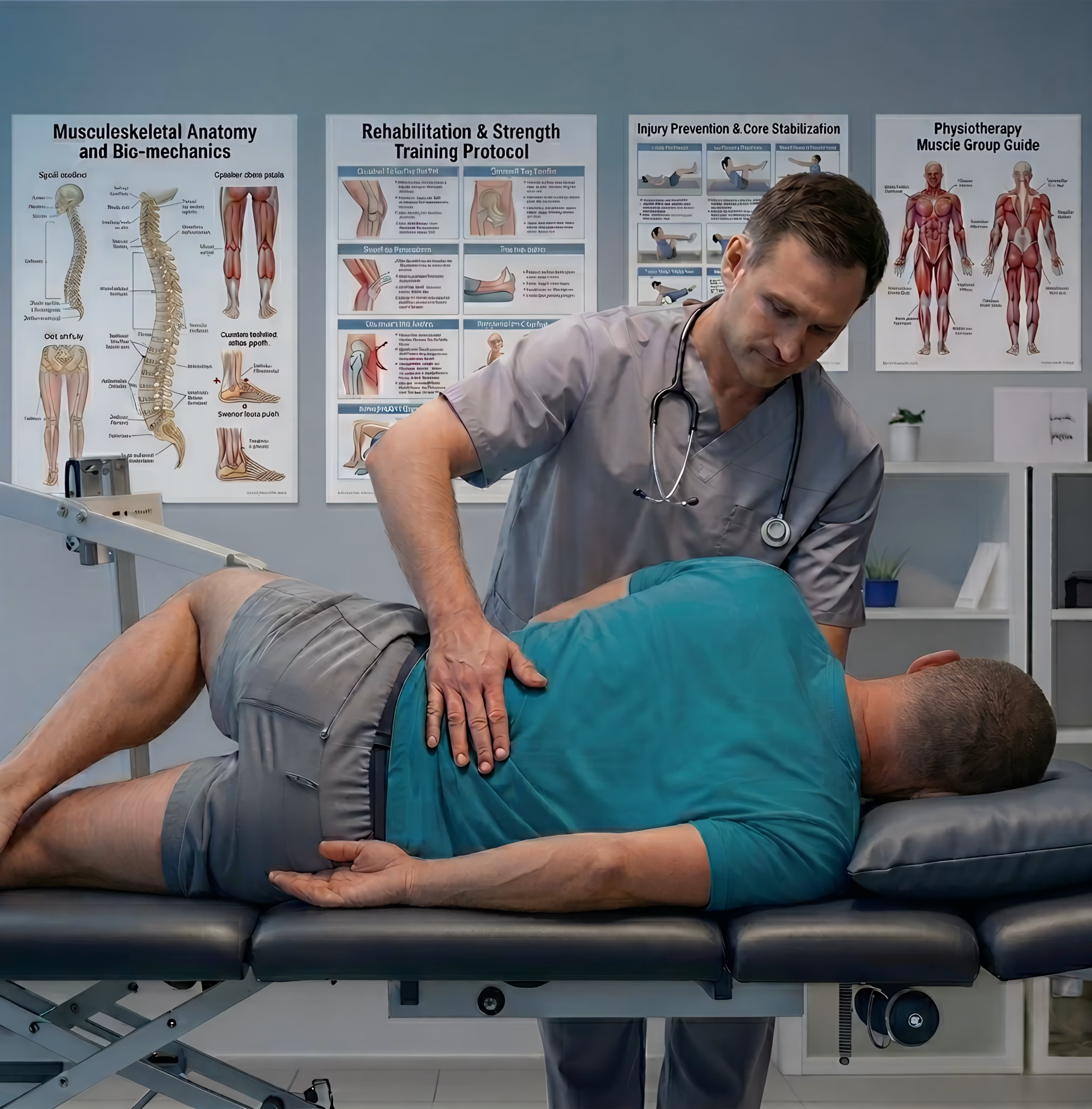



If your body’s healing process followed a fixed calendar, you wouldn’t be searching for answers like “how long does physiotherapy take to work” while managing a stubborn injury. It’s common to feel anxious about when you can return to the gym or the office without discomfort. You might even worry if the investment in your health is showing results quickly enough. At Heartland Physiotherapy, where no referral is required and free parking is available, we believe that understanding the “why” behind your timeline is the first step toward a more confident recovery.
This guide explores the biological factors that dictate tissue healing and what you can expect during your rehabilitation journey in Mississauga. We’ll provide a clear roadmap for your recovery, explaining how many patients see initial improvements within 2 to 4 weeks. You’ll also learn how to safely accelerate your progress so you can return to your favourite activities with restored function and less pain.
Key Takeaways
- Understand how your body’s natural healing phases dictate your recovery speed and why acute injuries often respond differently than long-standing chronic conditions.
- Find the answer to the common question, “how long does physiotherapy take to work,” by examining factors like injury severity and your personal health history.
- Discover how lifestyle factors like nutrition and overall health status can influence your inflammatory response and the total duration of your treatment plan.
- Recognize the difference between immediate pain relief and true functional restoration to ensure you return to sports or work only when your tissues are fully resilient.
The Biological Timeline: Why Physiotherapy Recovery Varies
Physical therapy (PT), also known as physiotherapy, is a structured partnership with your body’s natural regenerative abilities. Many patients ask, how long does physiotherapy take to work, but the answer is rooted in biology. Tissue healing is a physiological process that clinicians cannot rush; we can only support and optimize the environment for repair. While acute injuries from a recent fall might show progress quickly, chronic conditions that have developed over years often require more patience to rewire movement patterns and desensitize the nervous system.
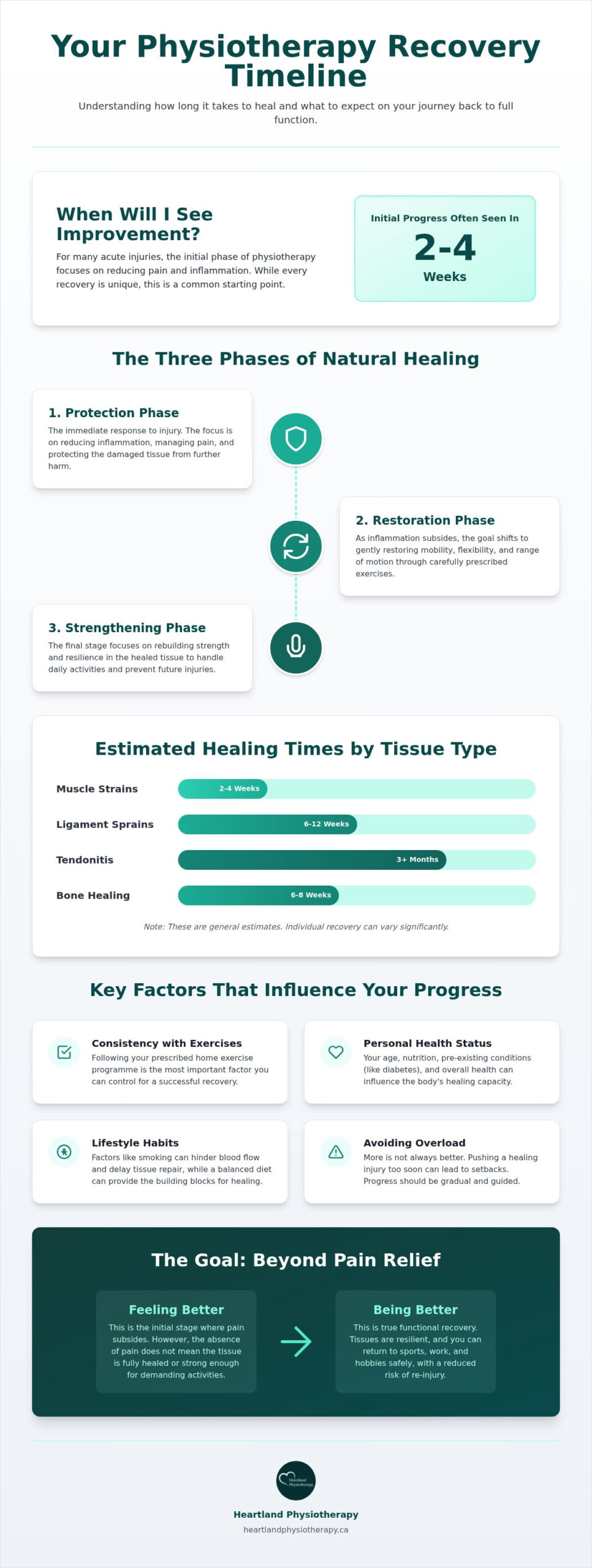
Specialized cases like MVA physiotherapy in Mississauga often involve specific protocols to manage whiplash or complex soft tissue trauma. Regardless of the cause, your recovery typically moves through three distinct phases: protection, restoration, and strengthening. Protection focuses on reducing inflammation, restoration helps you regain mobility, and strengthening builds the resilience needed to prevent future issues. Understanding these stages helps manage expectations when determining how long does physiotherapy take to work for your specific needs.
Estimated Healing Times by Injury Type
Different tissues repair at different speeds based on their blood supply and structural complexity. Your physiotherapist will tailor your plan based on these biological realities:
- Muscle Strains: Minor tears often see improvement within 2 to 4 weeks.
- Ligament Sprains: These typically require 6 to 12 weeks because ligaments have less blood flow than muscles.
- Tendonitis: Chronic tendon issues can require 3 months or more to reorganize collagen fibres.
Bone healing follows a strict biological window of 6 to 8 weeks before intensive rehabilitation begins. If you’re recovering from a total knee or hip replacement, expect a structured multi-month programme designed to restore your full range of motion and strength safely. Every body is unique, and our Mississauga team ensures your timeline respects your specific pace of healing.
Key Factors That Influence Your Speed of Progress
While biology provides the foundation, your daily habits act as the accelerator. Consistency with your individualized exercise programme is the single most important factor you can control. Patients often ask how long does physiotherapy take to work when they feel their progress has plateaued; however, the answer often lies in the frequency of their home care. Skipping prescribed movements can stall the restoration of function, while performing them correctly ensures the body continues to adapt and strengthen.
Personal health status also plays a significant role in your timeline. Age, nutrition, and pre-existing conditions like diabetes can slow down the body’s inflammatory response, which is essential for early healing. Smoking is another known factor that hinders blood flow and delays tissue repair. It’s also vital to remember that more isn’t always better. Overloading a healing injury too early can lead to painful setbacks. Research from Nuffield Health suggests that understanding how long physiotherapy takes to work involves looking at the 4 to 6 week window for initial changes, but this depends heavily on these variables.
The Benefit of an Integrated Multidisciplinary Approach
Sometimes, a single focus isn’t the fastest path to recovery. Combining treatment with a chiropractor for car accident injury in Mississauga can address joint mobility while your physiotherapist focuses on soft tissue resilience. Massage therapy or osteopathy can be incredibly helpful for managing compensatory pain, those aches that appear in your neck or back because you’re walking differently due to a foot injury. For patients who also experience tension headaches or migraines alongside their musculoskeletal complaints, chiropractic care for headaches Mississauga patients trust can be a valuable addition to an integrated treatment plan. Specialized techniques like dry needling for muscle pain Mississauga patients rely on or Kin-Taping may also help manage symptoms during the early, more sensitive phases of rehab. If you aren’t sure which approach is right, scheduling a professional assessment can help identify the best combination for your specific needs.
Setting Realistic Expectations: Pain Relief vs. Functional Recovery
Many patients stop their exercises once the initial sharp pain subsides. However, the absence of pain doesn’t mean the tissue is resilient enough for the gym or heavy lifting. When asking how long does physiotherapy take to work, it’s helpful to distinguish between feeling better and being fully functional. Harvard Health notes that Physical Therapy involves restoring movement and strength, which often takes longer than the initial reduction in discomfort. Understanding how long does physiotherapy take to work for your specific lifestyle means looking at your ability to perform tasks without a flare-up.
Real progress is often measured in functional wins. Instead of just tracking a number on a pain scale, look for signs like sleeping through the night without waking from stiffness or noticing an increased range of motion during daily chores. These milestones reflect the actual rebuilding of tissue strength and nervous system tolerance. Focusing on a goal like walking 1km or carrying groceries safely provides a better recovery roadmap than waiting for pain to hit zero. If back pain is a primary concern, understanding the differences between your treatment options is equally important — our guide on physiotherapy vs chiropractic for back pain Mississauga residents commonly experience can help you determine whether joint-focused care, muscle rehabilitation, or a blend of both is right for your situation.
Starting Your Recovery at Heartland Physiotherapy
Beginning your journey shouldn’t be complicated. We offer two convenient Mississauga locations on Montevideo Road and Watline Ave, both featuring free parking to make attendance stress-free. No referral is required to see our team, and we often have same-day appointments available for those needing immediate support. To help you maintain a consistent treatment schedule, new patients receive 20% off their initial visit. We also provide direct billing to most insurance companies, removing the financial friction that can sometimes interrupt your path to wellness. Our team is here to help you Book an Appointment and begin your recovery with confidence.
Taking the Next Step Toward Your Recovery
Understanding how long does physiotherapy take to work is about aligning your expectations with your body’s unique healing pace. While tissue repair follows a biological timeline, your commitment to a tailored exercise programme can significantly improve your outcomes. At Heartland Physiotherapy, our Registered Physiotherapists provide personalized, one-on-one care. We help you move beyond pain to regain your quality of life.
We make the process seamless with direct billing to most insurance providers and Blue Cross for Veterans Affairs Canada. New patients also receive 20% off their initial visit. This ensures you can start your journey with confidence and professional support. Book an Appointment at Heartland Physiotherapy today and let us partner with you in your restoration. Your path to better movement starts here.
Frequently Asked Questions
How many physiotherapy sessions will I need per week?
Most patients begin with 2 to 3 sessions per week during the initial phase to manage acute symptoms and inflammation. As your function improves and you gain independence with your home exercises, we often reduce this to once a week or bi-weekly. Your specific frequency depends on the severity of your condition and your personal recovery goals here in Mississauga.
Why do I feel sore after my physiotherapy treatment?
Feeling mild soreness for 24 to 48 hours after a session is a common physiological response to manual therapy or new exercises. This happens because we are stimulating tissues that have been restricted or inactive. This type of soreness is generally a positive sign that your body is adapting to treatment and building the resilience needed for long-term restoration.
Can I speed up my physiotherapy results at home?
Yes, your commitment to your individualized exercise programme is the most effective way to influence how long does physiotherapy take to work. Consistency at home reinforces the progress made during your one-on-one sessions at our clinic. By performing your stretches and strengthening movements as prescribed, you help your body maintain mobility and build the strength required to prevent future injuries.
What happens if my pain isn’t improving after several sessions?
If your progress stalls, our registered physiotherapists will perform a thorough re-assessment to identify any hidden barriers to healing. We might suggest an integrated approach, such as adding chiropractic care or massage therapy to your plan. Our team will always coordinate with other healthcare professionals if your condition requires further diagnostic testing or a different specialized approach.