
Could hands-on care be part of a chronic pain plan without being presented as a cure? When pain keeps affecting daily tasks, movement or confidence, it’s understandable to look for options. Osteopathy for chronic pain may be one approach to discuss, but claims that manual therapy can fix persistent pain deserve a careful look.
This article explains how osteopathy may fit into an individualized plan, what an assessment can involve and how to consider it alongside physiotherapy or other rehabilitation. You’ll also find practical questions to ask about a practitioner’s training, your goals and the proposed approach. The aim isn’t to promise a particular result. It’s to help you make an informed next-step decision with a healthcare provider in Meadowvale or elsewhere in Mississauga.
Key Takeaways
- Osteopathy for chronic pain may be considered as one part of individualized care, but it may not address every cause of persistent pain.
- Prepare for an assessment by describing your symptoms, relevant health history and goals. Ask whether the proposed approach suits your needs.
- Consider speaking with a healthcare professional if ongoing pain is affecting daily activities, movement or confidence.
- If you’re in Meadowvale or Mississauga, compare available care options and confirm a clinic’s current services before deciding on a next step.
Osteopathy for chronic pain: what it is and what it may address
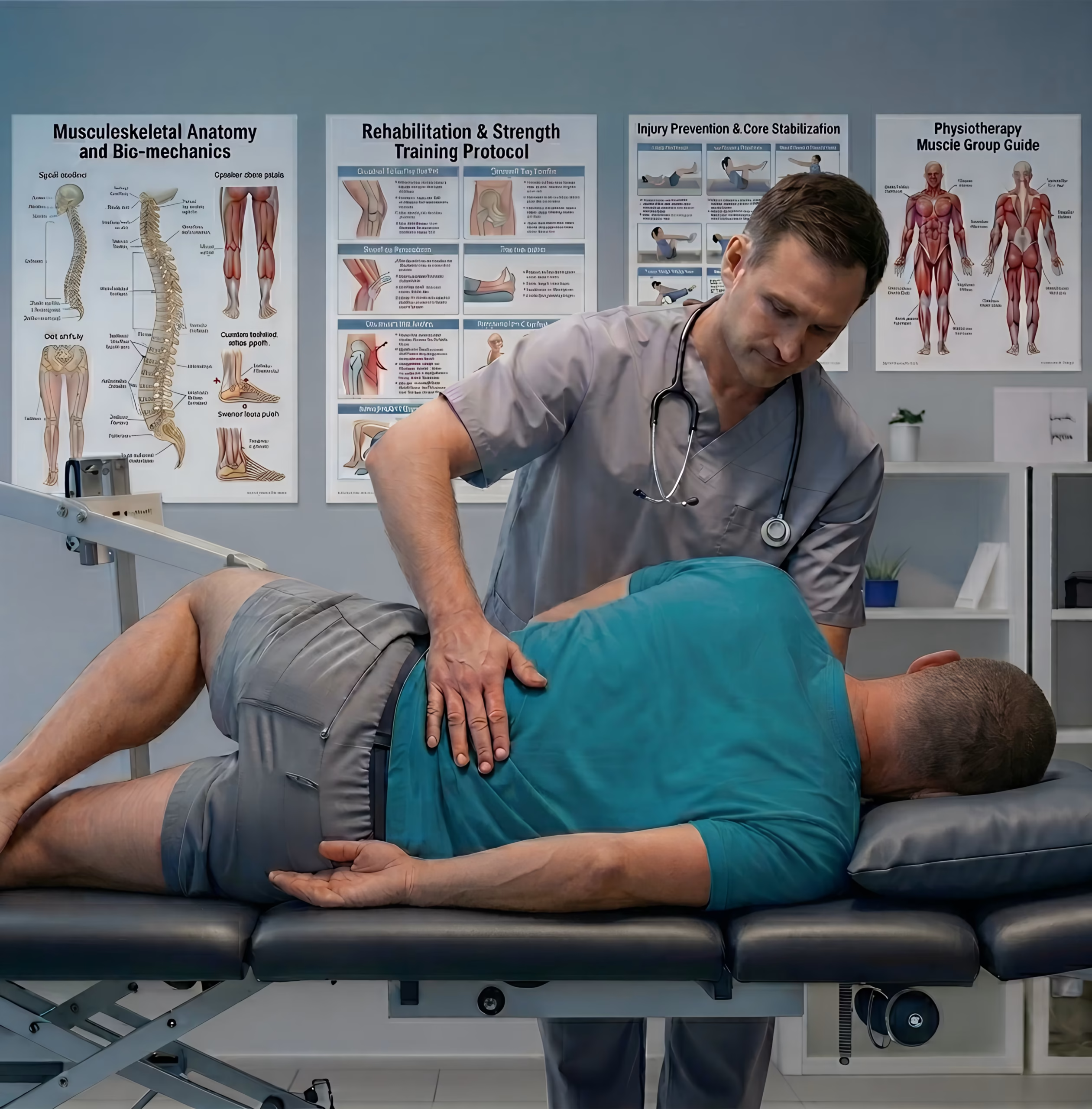
Osteopathy is a hands-on approach that may use physical techniques involving muscles and joints. For a neutral overview of what osteopathy is, see Wikipedia. In chronic pain care, it may be considered as one option for discussing comfort and movement. It doesn’t address every possible cause of persistent pain or replace other care that may be needed.
Whether osteopathy for chronic pain is suitable depends on your health history, symptoms and goals. People can respond differently, so discuss what an approach involves and what you hope to work towards rather than expecting a guaranteed result.
How is persistent pain different from a short-term pain episode?
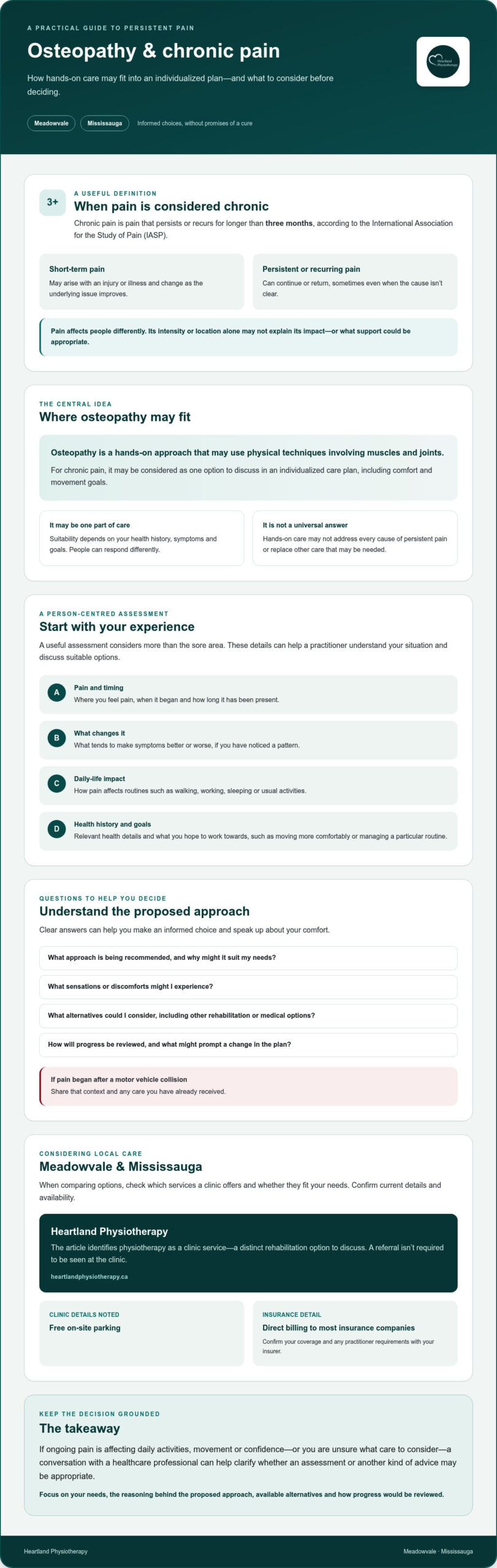
Chronic pain is pain that persists or recurs for longer than three months. This definition is used by the International Association for the Study of Pain (IASP). Short-term pain may arise with an injury or illness and change as the underlying issue improves. Ongoing pain can continue or return, sometimes even when its cause isn’t clear.
Pain can affect people differently. It may make walking, working, sleeping or taking part in usual activities more difficult, but not everyone experiences the same limits. The intensity or location of pain alone may not explain its impact or what support could be appropriate.
An assessment should consider more than the sore area. Sharing when the pain began, what changes it, how it affects daily routines and any relevant health history can help a practitioner understand your situation and discuss suitable options. Hands-on care may be one part of that conversation, not a universal answer.
How to assess whether osteopathy could fit your chronic pain care
A useful assessment starts with your experience, not a preset treatment plan. Describe where you feel pain, how long it’s been present, what tends to change it and how it affects daily activities. Share relevant health history, then explain what you’d like to work towards, such as moving more comfortably or managing a particular routine.
The practitioner should consider this information and discuss whether osteopathy may be appropriate, or whether another option or medical advice may be a better next step. The osteopathic approach to chronic pain resource from the American Osteopathic Association describes care by osteopathic physicians in the United States. It can offer background, but it doesn’t establish what’s appropriate for your individual situation.
What should you discuss during an osteopathy assessment?
Bring questions, too. Understanding the proposed care can help you make an informed choice and speak up about your comfort.
- What approach are you recommending, and why might it suit my needs?
- What sensations or discomforts might I experience?
- What alternatives could I consider, including other rehabilitation or medical options?
- How will we review progress, and what would prompt a change in the plan?
If pain began after a motor vehicle collision, mention that context and any care you’ve already received. Heartland Physiotherapy’s MVA physiotherapy recovery guide may also help you explore recovery-related considerations.
In Meadowvale or Mississauga, Heartland Physiotherapy offers physiotherapy, a distinct option to discuss when considering rehabilitation. You can contact the clinic to ask about its services and confirm current details and availability.
Considering osteopathy in Meadowvale or Mississauga: practical next steps
Persistent pain may be worth discussing with a healthcare professional if it’s affecting your movement, daily activities or confidence, or if you’re unsure what care to consider. You don’t need to choose a treatment before asking questions. A conversation can help clarify whether an assessment is suitable or whether another kind of medical advice may be appropriate.
What can you expect when contacting a local clinic?
When comparing care in Meadowvale and Mississauga, check which services a clinic offers and whether they fit your needs. Heartland Physiotherapy lists physiotherapy among its services. Contact the clinic to confirm current details and availability, and ask whether physiotherapy may be appropriate for your concern. A referral isn’t required to be seen at the clinic.
Before reaching out, note what you’d like help with and any questions about an assessment, proposed care, alternatives or how progress would be reviewed. If you’re considering broader rehabilitation planning, this physiotherapy recovery timeline explains why the pace of care can vary.
For practical planning, Heartland Physiotherapy confirms free on-site parking and direct billing to most insurance companies. Check with your insurer about your own plan and any practitioner requirements. Direct billing doesn’t mean every plan covers the service.
If you’re considering osteopathy for chronic pain, a useful next step is to describe what you’re experiencing to a healthcare professional and ask what assessment options are available. That can help you decide whether to proceed, explore alternatives or seek medical advice, without assuming one approach is right for everyone.
Choose a next step that fits your needs
Osteopathy for chronic pain may be one option to discuss, but it isn’t a guaranteed solution or the right fit for everyone. An assessment should consider your symptoms, health history and goals, and help you understand the proposed approach, alternatives and how progress will be reviewed. If persistent pain is affecting daily activities or movement, a conversation with a healthcare professional can help you consider suitable next steps.
Heartland Physiotherapy serves Meadowvale and Mississauga and lists physiotherapy among its services. Contact the clinic to confirm current service details and availability. Free on-site parking is available, and direct billing is available to most insurance companies. Check your plan for coverage details.
Contact Heartland Physiotherapy to discuss its services and your next step. You can take this one step at a time and make an informed choice that reflects your needs.
Frequently Asked Questions
Can osteopathy help with chronic pain?
Osteopathy for chronic pain may be considered as one part of individualized care, but whether it suits you and how you respond can vary. Relief isn’t guaranteed. An assessment can help you discuss your symptoms, goals, other care options and any concerns before deciding. Osteopathy shouldn’t be treated as a cure or a replacement for medical advice.
What happens during an osteopathy assessment for chronic pain?
An osteopathy assessment generally begins with a conversation about your symptoms, when they began, relevant health history and how pain affects daily activities. You can also share what you hope to do more comfortably. The practitioner should consider these details before discussing whether osteopathy or another care option may be appropriate. Any proposed plan should reflect your individual needs.
Is osteopathy the same as physiotherapy or chiropractic care?
No. Physiotherapy, chiropractic care and osteopathy are distinct approaches, and suitability depends on your needs and assessment, not a ranking of professions. In Ontario, manual osteopathy isn’t a regulated health profession, and the title “Osteopath” is reserved for medical doctors. Ask about a provider’s qualifications, scope of practice and proposed care, and discuss options with a healthcare professional.
When should I seek professional advice for persistent pain?
Consider speaking with a qualified healthcare professional if pain continues to affect daily activities or you’re concerned about what to do next. Describe how long it’s been present, which activities are affected and any relevant health history. In Meadowvale, Mississauga, Heartland Physiotherapy offers physiotherapy. A referral isn’t required to be seen at the clinic. Contact the clinic to confirm current service details.