


Could an adjustment help your back, or is it being asked to do too much? If you’re considering a chiropractic adjustment for back pain, it’s reasonable to wonder what happens, whether it may feel uncomfortable, and how a practitioner decides if it’s suitable. An adjustment is one possible part of care, not a stand-alone promise of relief.
This guide explains what an adjustment generally involves, what it may aim to do, and what it cannot guarantee. You’ll learn what a thoughtful assessment and informed consent should include, what sensations you might experience, and when back pain may need medical attention. You can ask questions, discuss alternatives, and decline or stop a technique. We’ll also cover practical next steps if pain persists or affects everyday activities, so you can make a more informed decision about care in Meadowvale and Mississauga.
Key Takeaways
- A chiropractic adjustment for back pain is one possible hands-on approach, not a guaranteed solution or a necessary choice for everyone.
- Consider how long your pain has lasted, what affects it, and how it changes your everyday movement when deciding on next steps.
- Keep track of your symptoms and changes in function to make a professional assessment more useful.
- Heartland Physiotherapy in Mississauga treats low back pain and can help you discuss appropriate care options.
What Is a Chiropractic Adjustment for Back Pain?
Back pain can make everyday movements, from bending to get dressed to sitting comfortably, feel uncertain. Deciding what kind of care to seek can be just as challenging. A chiropractic adjustment is a hands-on technique that involves moving spinal joints. The movement, pressure and approach can vary, so there isn’t one method that suits everyone. For a general overview of the profession and spinal adjustments, see Chiropractic.
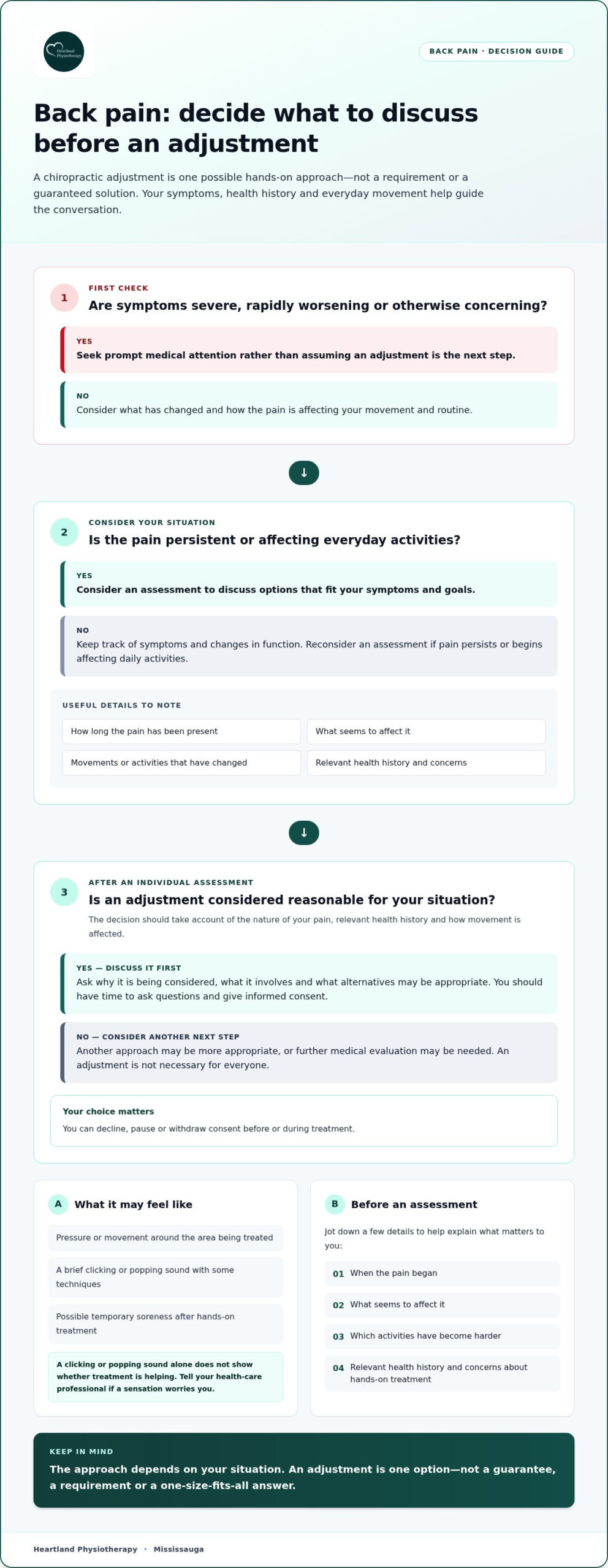
An adjustment is a hands-on technique intended to move spinal joints; it isn’t a guaranteed cure for back pain. Whether it may be appropriate depends on an individual assessment, including the nature of the pain, relevant health history and how movement is affected. Before treatment, discuss the purpose of the technique and the role it may have in your care. An adjustment is not the only option to consider.
What might an adjustment feel like?
Experiences differ. You may feel pressure or movement around the area being treated, and some techniques can produce a brief clicking or popping sound. That sound alone doesn’t show whether treatment is helping. If a sensation worries you, say so. Ask what the technique involves and discuss your comfort with your healthcare professional. You can give or withdraw consent before or during treatment.
A useful conversation should make clear why an adjustment is being considered and what alternatives may be appropriate. The decision should reflect your symptoms and preferences, not a one-size-fits-all expectation.
When Might an Adjustment Be Considered, and What Are the Limitations?
The right approach depends on what your back pain feels like, how long it has been present, and what may be contributing to it. Pain after a recent strain may call for different considerations than persistent discomfort or pain that affects walking, sleep or work. An assessment can help determine whether a hands-on technique is reasonable, whether another approach may be more appropriate, or whether further medical evaluation is needed.
An adjustment isn’t necessary for everyone with back pain, and it may not suit every person or situation. It’s one option, not a requirement or a guaranteed route to relief. Some people may notice temporary soreness after hands-on treatment. Responses vary, so discuss possible effects and what to do if you feel worse with your healthcare professional.
What should happen before treatment begins?
Before considering a chiropractic adjustment for back pain, the clinician should ask about your symptoms, health history, goals and the activities pain is affecting. They should explain the proposed approach in clear terms, including why it may be considered and what alternatives might be appropriate. You should have time to ask questions and give informed consent. You can decline or pause treatment.
Seek prompt medical attention for severe, rapidly worsening or otherwise concerning symptoms rather than assuming an adjustment is the next step. If back pain is affecting your daily activities, Heartland Physiotherapy’s back-pain care in Mississauga offers physiotherapy assessment and treatment as a next step.
Your Next Steps for Back Pain in Meadowvale and Mississauga
A clear next step doesn’t have to begin with choosing a particular treatment. Start by noticing what has changed. If pain persists or affects daily activities, consider an assessment and discuss options suited to your situation. A chiropractic adjustment for back pain is one possibility; your symptoms and goals should guide the conversation.
How to prepare for a back-pain assessment
Before your appointment, jot down when the pain began, what seems to affect it, and which activities have become harder. Note relevant health history and any concerns about hands-on treatment. This information can help the clinician understand your priorities and discuss appropriate next steps with you.
Recovery timelines vary. During an assessment, ask how your goals and response to care may help guide expectations for your recovery.
Heartland Physiotherapy is a local Mississauga clinic that treats low back pain, serving Meadowvale and surrounding communities. A physiotherapy assessment can help you explore care options without assuming that one technique fits everyone. The clinic offers free parking and direct billing to most insurance companies.
If your back pain is affecting your routine, explore back-pain care at Heartland Physiotherapy and discuss a suitable plan with a clinician.
Take a Thoughtful Next Step for Your Back
A chiropractic adjustment for back pain is one possible hands-on approach, not a necessary choice for everyone or a guaranteed fix. Whether it may be suitable depends on your symptoms, health history and how pain affects daily movement. Before deciding, note what has changed and discuss your concerns, goals and care options during an assessment. Seek prompt medical attention if symptoms are severe, rapidly worsening or otherwise concerning.
For people in Meadowvale and Mississauga, Heartland Physiotherapy treats low back pain. An assessment can help you consider a suitable next step based on your needs. The clinic also offers free parking and direct billing to most insurance companies. Book an Appointment to explore back-pain care and take an informed step towards moving with greater confidence.
Frequently Asked Questions
Can a chiropractic adjustment help with back pain?
A chiropractic adjustment may help some people with back pain, but it isn’t suitable or necessary for everyone, and relief isn’t guaranteed. Whether it’s worth considering depends on factors such as the nature and duration of your symptoms, your health history and how pain affects daily activities. A healthcare professional can assess your situation and discuss whether this hands-on approach or another option may be appropriate.
Is a chiropractic adjustment painful?
A chiropractic adjustment won’t feel the same for everyone. You may notice pressure or movement, and some people experience temporary soreness afterwards. Tell your healthcare professional about discomfort or concerns before treatment, and ask what to expect. You can discuss your comfort, give or decline consent, and ask to pause or stop if you feel uncomfortable during the technique.
What happens during a chiropractic adjustment for back pain?
Before an adjustment is considered, a healthcare professional should discuss your symptoms, health history and goals, as well as how back pain affects your movement or daily activities. If an adjustment is proposed, they should explain the approach and its purpose, then obtain your consent. The technique can vary. Ask questions before proceeding, and share any discomfort or concerns during treatment.
When should I seek medical attention for back pain instead of an adjustment?
Seek prompt medical attention if your back pain is severe, rapidly worsening or accompanied by symptoms that concern you. Don’t assume an adjustment is the right next step in these situations. If pain persists or interferes with daily activities, arrange an assessment to discuss suitable care. A healthcare professional can help guide next steps based on your symptoms and health history.