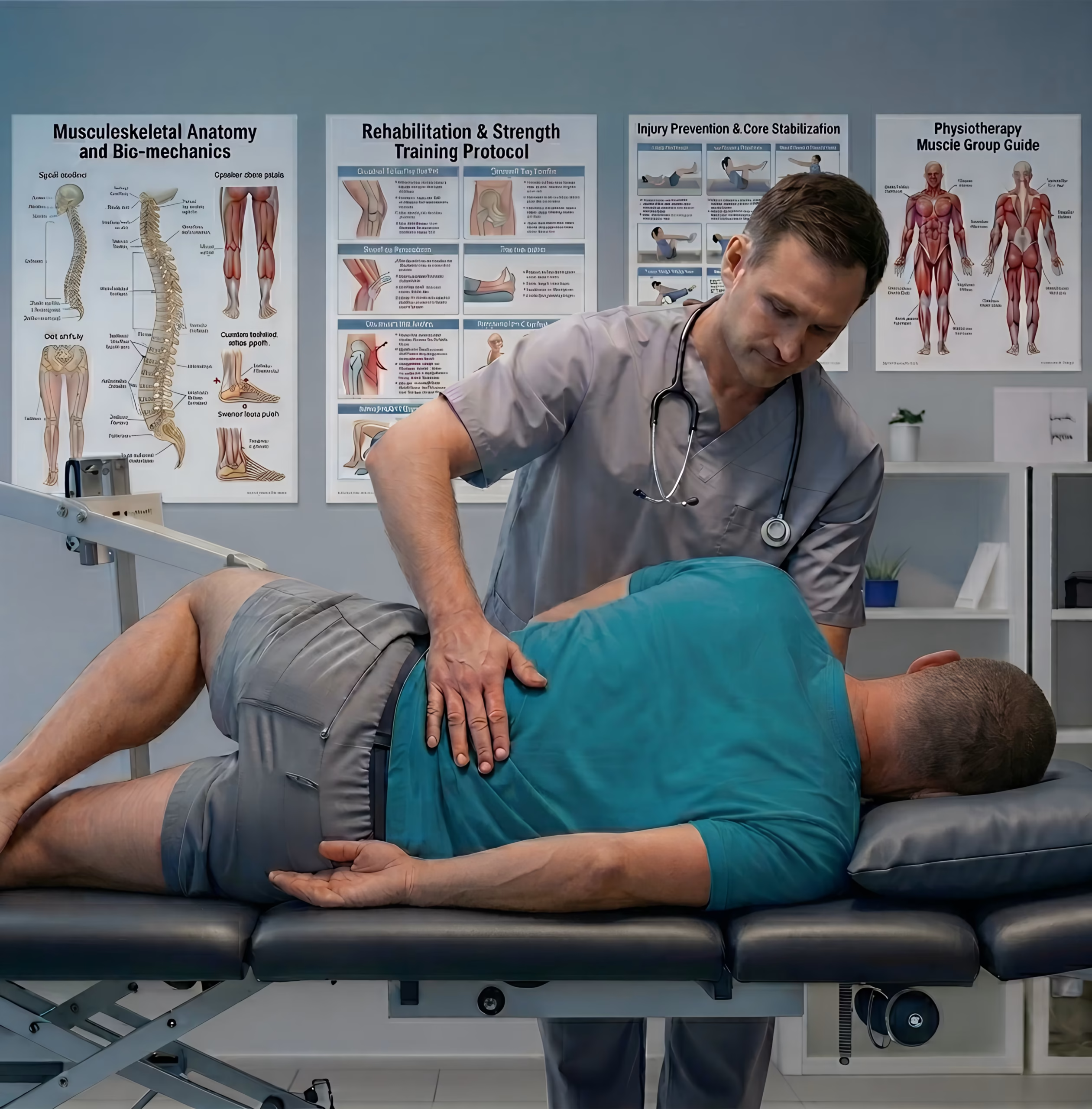


Effective massage doesn’t have to mean enduring pain. If you’re considering deep tissue massage, it’s understandable to wonder whether the pressure should feel intense or whether discomfort means it’s working. Treatment should be guided by your needs and feedback, not by how much pressure you can tolerate.
This article explains what deep tissue massage generally involves, what sensations may be expected, and how to decide whether it may suit your situation. You’ll also find practical guidance on what to discuss before and during a session, including where you feel tension and what pressure feels comfortable. If you’re in Meadowvale or elsewhere in Mississauga, knowing what to ask can help you make a more informed decision about your care.
Key Takeaways
- Deep tissue massage focuses on deeper muscle and connective tissue. It does not require painful pressure.
- Before treatment, discuss your goal, relevant health history, current symptoms, and comfort preferences.
- Be specific about the areas you want to address, and speak up if the pressure feels too intense.
- Heartland Physiotherapy is located in Meadowvale, Mississauga, and can be a local starting point for discussing your care needs.
What Does Deep Tissue Massage Do, and How Is It Different?
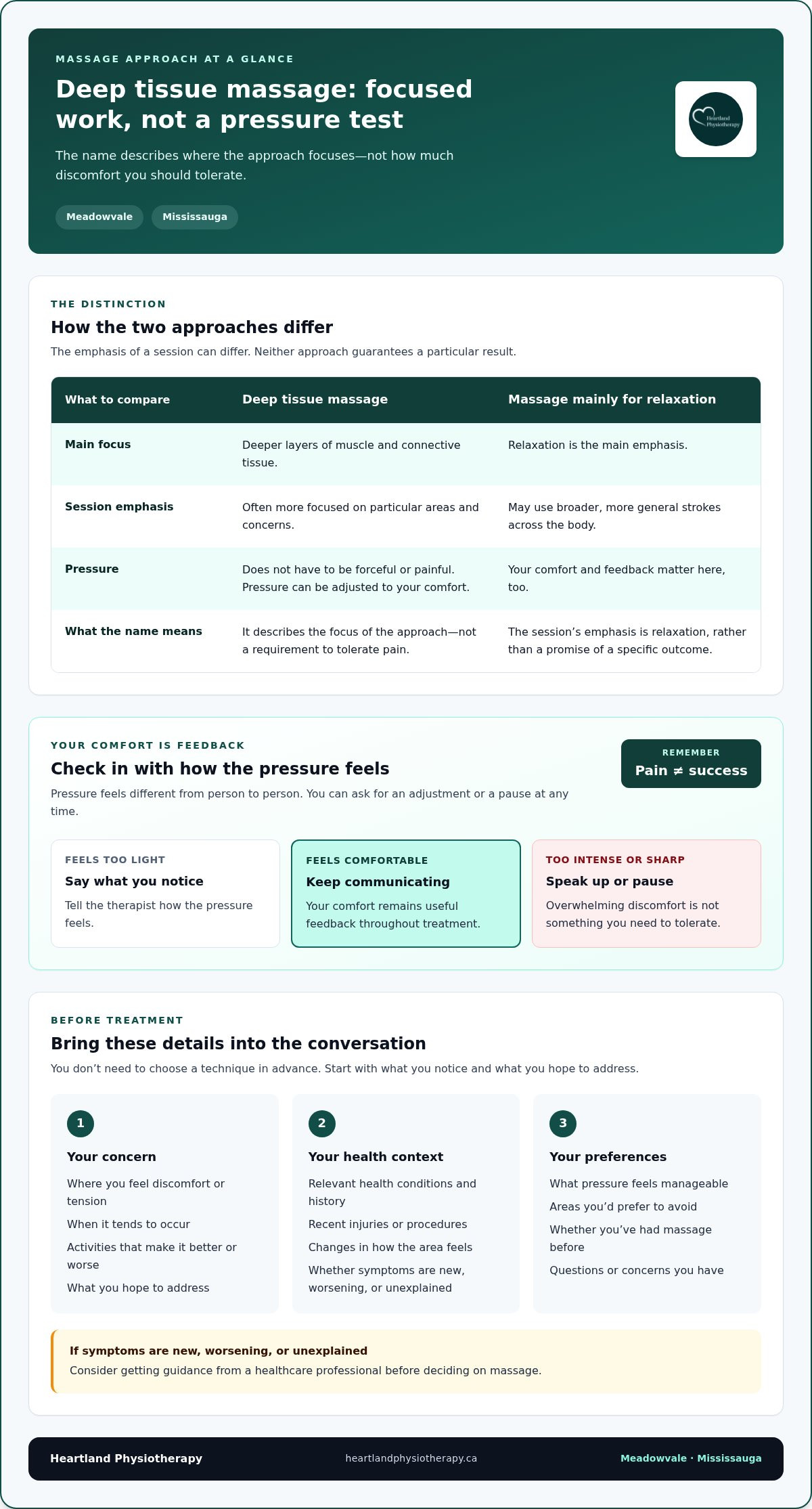
Deep tissue massage describes an approach that focuses on deeper layers of muscle and connective tissue. A therapist may work on specific areas of tension rather than use broad, general strokes across the body. The name describes the focus of the approach, not a rule that pressure must be forceful or painful.
Compared with massage intended mainly for relaxation, deep tissue massage is generally more focused on particular areas and concerns. The distinction is about the session’s emphasis, not a guarantee of a particular result. The term also appears in discussions of therapeutic massage: medical massage, which includes deep tissue massage, is used for various medical conditions.
For example, you might want to discuss persistent shoulder tightness or a particular area that feels restricted. Before deciding on an approach, describe what you notice, how it affects your daily activities, and what you hope to address. You can also ask what kind of pressure is being considered and how it can be adjusted to your comfort.
Does deep tissue massage have to feel painful?
No. Pressure feels different from person to person, and your comfort is useful feedback throughout treatment. Tell the therapist whether the pressure feels comfortable, too light, or too intense, and ask for an adjustment whenever you need one. Effective treatment should respond to you, not become a pressure contest. Sharp or overwhelming discomfort is a reason to speak up, not something you need to tolerate to make the session worthwhile.
How to Decide Whether Deep Tissue Massage May Suit Your Needs
Start with what you’d like help addressing. Is there a particular area that feels tight or uncomfortable? Does muscle tension affect an everyday movement or activity? Being clear about your goal helps shape a conversation about whether this approach may be suitable. If you’re unsure, describing what you notice is a useful starting point. You don’t need to identify a technique in advance.
Your health history and current symptoms matter, too. Mention relevant health conditions, recent injuries or procedures, and any changes in how the area feels. This context can help the therapist consider your needs and discuss an appropriate approach. If symptoms are new, worsening, or unexplained, consider getting guidance from a healthcare professional before deciding on massage.
What should you discuss before treatment?
Before a session, describe where you feel discomfort, when it tends to occur, and which activities make it better or worse. Explain what you hope to address and whether you’ve had massage before. It’s also helpful to mention what pressure usually feels comfortable, any areas you’d prefer to avoid, and questions or concerns you have.
- Identify the area you want to discuss and what you hope to address.
- Describe relevant symptoms, health history, and any recent changes.
- Explain what pressure feels manageable, and speak up if that changes.
Sharing your preferences helps guide a more responsive conversation about care. During treatment, communicate promptly if pressure feels sharp, overwhelming, or otherwise uncomfortable. Pain isn’t a measure of success. You can ask for an adjustment or a pause. If you’re considering care in Meadowvale, Heartland Physiotherapy is a local clinic where you can discuss your needs.
Exploring Deep Tissue Massage in Meadowvale, Mississauga
If you live in Meadowvale or another part of Mississauga, choosing care close to home can make it easier to discuss your concerns and next steps. Heartland Physiotherapy is located in Meadowvale, Mississauga. A conversation about your needs can help you understand what care may be appropriate, rather than assuming one approach is right for everyone.
Taking a comfortable first step with local care
Before making a decision, think about what you want to address. You might have a specific area that feels tight, discomfort that affects certain activities, or questions about pressure and what a session may involve. Sharing these details makes the discussion more useful. Mention relevant health history or changes in your symptoms, and be clear about what you’re comfortable with.
A practical first step is to describe your concern and ask about an approach that respects your comfort. You don’t need to know the exact technique you want before starting that conversation. Ask questions, explain what you hope to address, and speak up if your preferences or comfort change. The aim is to make an informed choice, not to assume that stronger pressure is automatically better.
For people in Meadowvale and the wider Mississauga area, Heartland Physiotherapy offers a local place to discuss care needs. Visit Heartland Physiotherapy to learn more about the clinic and its services.
Choose a next step that feels right
Your next step doesn’t need to be a decision about a technique. Start by considering what you want help with and what you’d like to know before choosing an approach. If you’re unsure, write down the main question you want answered, such as what kind of care may suit your concern or what to expect from a treatment discussion. That gives you a clear starting point without committing to a specific approach.
Keep your expectations flexible. A discussion can help you consider options, but no single approach is right for everyone. When you’re ready to discuss your care needs, contact Heartland Physiotherapy in Meadowvale, Mississauga, to learn about the clinic and book an appointment. Take the time you need to make an informed choice that feels comfortable for you.
Frequently Asked Questions
What should I wear to a deep tissue massage?
Wear something comfortable that’s easy to change out of, and choose clothing that helps you feel at ease before and after the session. Ask the practitioner what to expect regarding draping and clinic procedures, since these may vary. If you have concerns about changing or particular areas being treated, mention them beforehand so you can discuss your comfort.
Can I go back to my usual activities after a deep tissue massage?
It depends on how you feel afterward, so pay attention to your body rather than assuming you’ll feel the same as usual. You may prefer to take it easy if an activity feels uncomfortable, and resume your routine as you feel able. If symptoms concern you or persist, seek advice from an appropriate healthcare professional.
When should I seek medical advice about soreness after a massage?
Mild tenderness that settles can happen after massage, but seek medical advice if soreness feels severe, unusual, or persistent. Also get guidance if you notice symptoms that concern you or interfere with your usual activities. A healthcare professional can advise you based on your situation. Don’t assume a troubling symptom is simply a normal response to massage.