
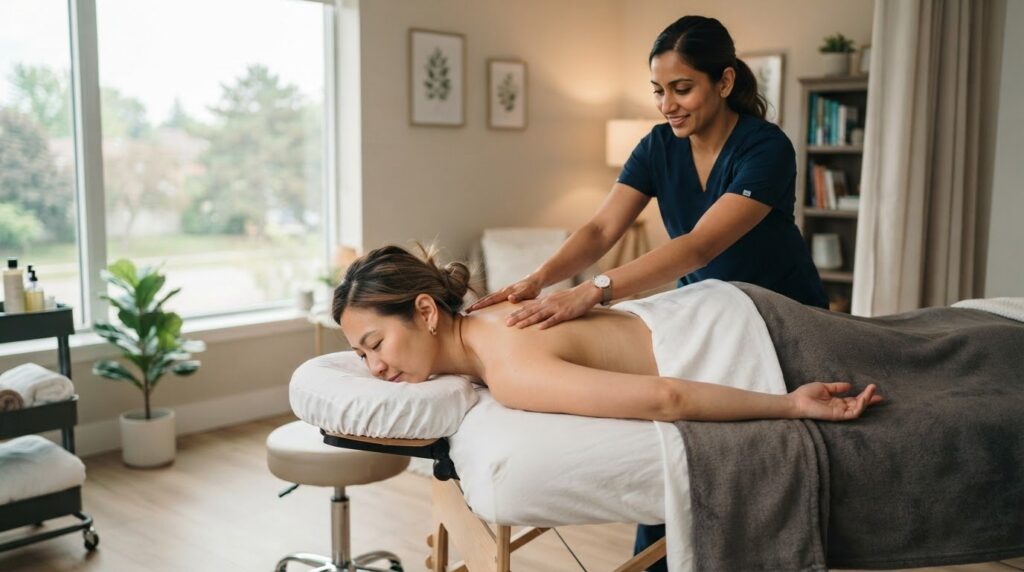
What if a massage could feel calming without requiring you to tolerate more pressure than you’re comfortable with? Swedish massage typically uses flowing strokes and kneading, but the experience should still reflect your preferences and comfort.
It’s understandable to wonder what happens during an appointment, how much pressure is involved, and how this approach differs from deep tissue massage. This guide explains common techniques, how to prepare, and how to communicate your needs so you can make an informed choice.
You’ll also learn what to expect around privacy and comfort, along with potential benefits and precautions. If you’re considering massage therapy in Meadowvale, understanding these details can help you decide what you’d like to discuss at an appointment.
Key Takeaways
- Swedish massage commonly uses flowing strokes, kneading and other manual movements. The exact approach can vary.
- Share your goals and comfort preferences. You can request changes to pressure or technique, pause, or stop treatment.
- Swedish massage is generally broader and more flowing than deep tissue massage, which often focuses on specific areas with firmer pressure.
- Heartland Physiotherapy offers massage therapy in Meadowvale, with direct billing to most insurance companies and free parking available.
What Is Swedish Massage? Understand Its Techniques and Intended Feel
Swedish massage is a style commonly associated with flowing strokes and a mix of hands-on techniques. The therapist may adjust the sequence, pace and pressure to suit the session, so one treatment may not feel exactly like another. People often seek massage for relaxation or everyday muscle tension, but these aims are not guaranteed outcomes. Sharing what you hope to get from a session can help guide a conversation about what feels comfortable and appropriate.
Common techniques include:
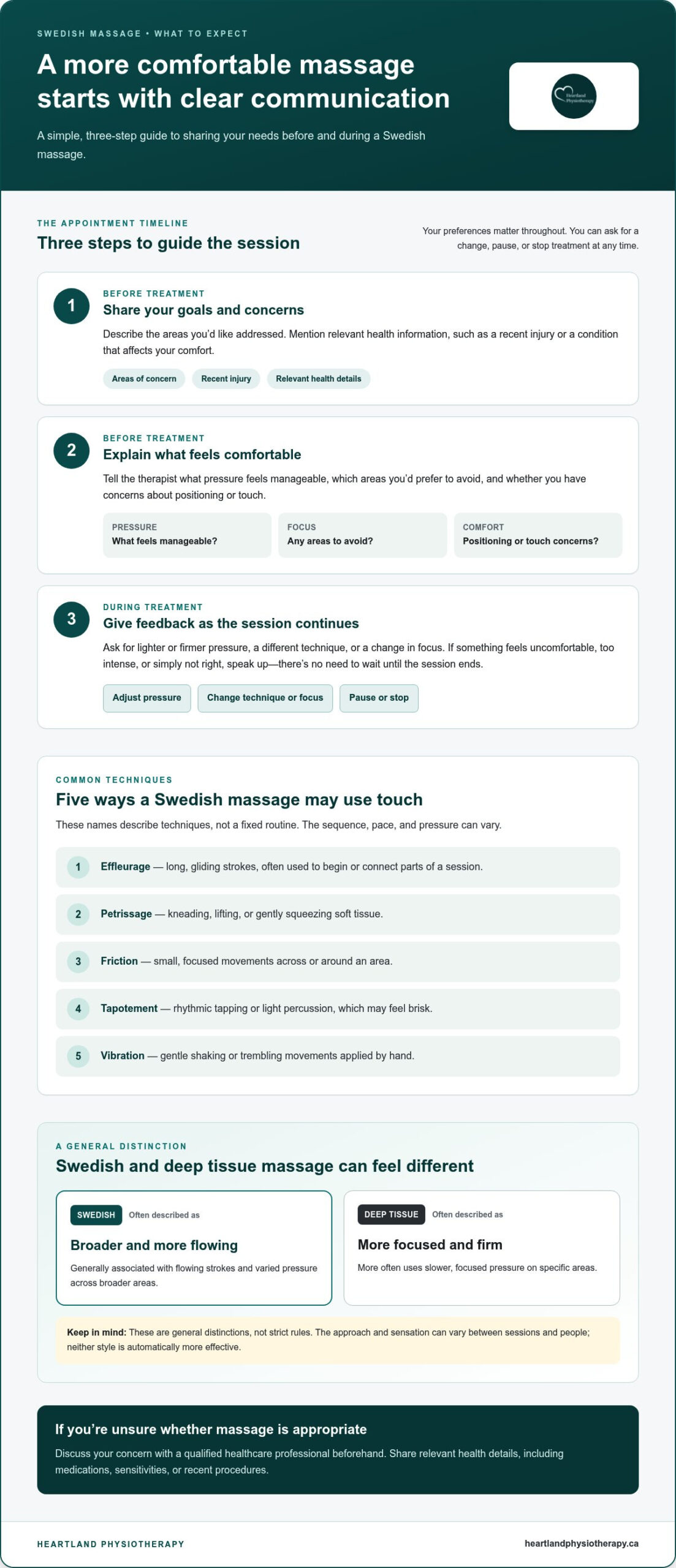
- Effleurage: Long, gliding strokes across the body, often used to begin or connect parts of a session.
- Petrissage: Kneading, lifting or gently squeezing soft tissue.
- Friction: Small, focused movements across or around an area.
- Tapotement: Rhythmic tapping or light percussion, which may feel brisk.
- Vibration: Gentle shaking or trembling movements applied by hand.
These names describe ways of working, not a fixed routine. For a broader overview of Swedish massage techniques and history, see the linked reference.
How Does Swedish Massage Differ from Deep Tissue Massage?
Swedish massage is generally associated with flowing strokes and varied pressure across broader areas. Deep tissue massage more often uses slower, more focused pressure on specific areas. These are general distinctions, not strict rules: the approach and sensation can vary between sessions and people. Neither style is automatically more effective. A practical comparison is that Swedish massage tends to feel broader and more flowing, while deep tissue work is usually more focused and firm.
Pressure is personal, so tell the therapist what feels manageable. If a technique is uncomfortable or you want a change, ask for an adjustment. You can communicate throughout the session rather than waiting until it ends.
What to Expect During Swedish Massage: Prepare, Communicate, and Stay Comfortable
A little preparation can make a Swedish massage appointment feel more predictable. Use this simple sequence to help the therapist understand your preferences and adjust the session as needed:
- Share your goals and concerns. Describe the areas you’d like addressed and mention relevant health information, such as a recent injury or a condition that affects your comfort.
- Discuss comfort preferences. Explain what pressure feels manageable, which areas you’d prefer to avoid, and whether you have concerns about positioning or touch.
- Give feedback during treatment. Say if you’d like lighter or firmer pressure, a different technique, or a change in focus. You can pause or stop the session at any time.
You don’t need to wait until the appointment ends to speak up. If a sensation feels uncomfortable, too intense or simply not right, request an adjustment. Clear feedback helps the therapist tailor the approach, though it cannot guarantee a particular result.
What Should You Tell Your Massage Therapist Beforehand?
Share the areas of concern, your pressure preferences and any relevant health details, including medications, sensitivities or recent procedures. If you’re unsure whether massage is appropriate for a health concern, discuss it with a qualified healthcare professional beforehand. Your preferences matter throughout the session, so keep communicating.
Heartland Physiotherapy offers massage therapy in Meadowvale as part of its broader care. Direct billing to most insurance companies and free parking are available. Learn more about massage therapy at Heartland Physiotherapy.
Considering Massage Therapy in Meadowvale? Choose a Comfortable Next Step
Swedish massage is one style of massage. If you’re considering massage therapy in Meadowvale or elsewhere in Mississauga, start by identifying what you’d like to discuss, such as relaxation, muscle tension or your preferred pressure. Knowing your priorities can help you have a more focused conversation about your needs and comfort.
How Can You Decide Whether Massage Therapy Fits Your Needs?
Think about the areas you’d like addressed, the pressure you find comfortable, and anything that might affect treatment, such as a health concern or recent injury. If you’re uncertain whether massage is appropriate for you, discuss that concern with a qualified healthcare professional. An individual conversation can help clarify suitable care options, without guaranteeing a particular outcome.
Heartland Physiotherapy offers massage therapy in Meadowvale, with direct billing to most insurance companies and free parking for patients. New patients receive 20% off the initial visit. These details can help you plan, while your goals and comfort remain central to deciding whether massage therapy is a suitable next step.
To explore massage therapy at Heartland Physiotherapy, visit the clinic’s website.
Take the Next Step at Your Pace
Choosing massage care can start with a simple question: what would make an appointment feel worthwhile for you? You might be looking to unwind, discuss areas of muscle tension, or understand whether massage therapy fits your needs. Keeping that intention in mind can make your conversation more focused. You can also adjust your preferences as you learn what feels comfortable.
Information about Swedish massage can help you describe the style you’re curious about. At an appointment, share what you’re looking for and discuss the approach that suits your needs and comfort.
Explore massage therapy at Heartland Physiotherapy in Meadowvale, Mississauga, and consider what you’d like to discuss with the clinic team. Explore massage therapy at Heartland Physiotherapy.
Frequently Asked Questions
What does a Swedish massage feel like?
A Swedish massage may feel like steady contact that changes as the therapist moves between areas of the body. You might notice a warm glide or gentle rhythmic pressure, while some areas may feel more sensitive. Sensation can also depend on your position and the area being worked. If anything feels uncomfortable, speak up and request an adjustment.
Is Swedish massage supposed to hurt?
Massage doesn’t need to hurt, and intensity isn’t a measure of whether a session is useful. Mild pressure may be noticeable, but sharp, burning or worsening pain deserves attention. Tell the therapist if it occurs rather than trying to endure it. If symptoms continue after treatment or concern you, discuss them with a healthcare professional.
Can Swedish massage help with muscle tension?
Massage may be one option to discuss when an area feels tight, but it should not be assumed to address the reason for that sensation. Before an appointment, note when the tension tends to occur and whether it affects a specific activity, such as turning your head or reaching overhead. Those details can make a discussion about suitable care more specific.
What should I wear to a Swedish massage?
You generally don’t need special clothing; choose an outfit you can change out of comfortably. Clinic procedures can vary, so ask what to expect beforehand. The therapist should explain draping and which areas will be uncovered, and treatment should follow your consent. You can state what you’re comfortable with and decline having any area treated.