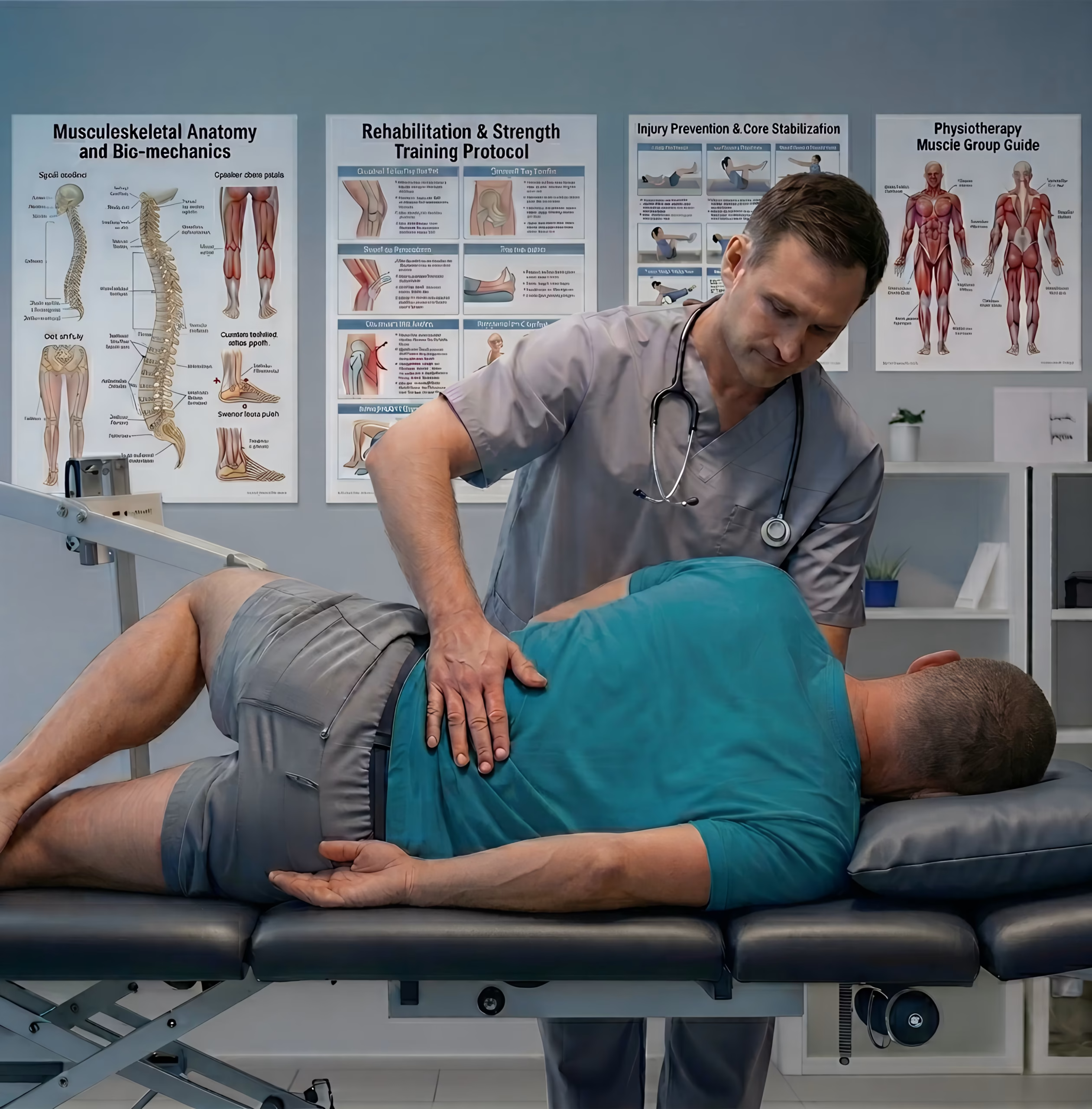



To boost massage therapy and physiotherapy in a recovery plan, start by understanding that they have different roles. Massage therapy may focus on soft-tissue discomfort, while physiotherapy assesses movement and function to guide rehabilitation. One does not automatically replace the other, and not everyone needs both.
This article explains how the approaches differ, how to decide what to discuss and how physiotherapy can relate to everyday activities such as walking, working or returning to exercise. At Heartland Physiotherapy in Meadowvale, one-on-one care with a registered physiotherapist includes an assessment and an individualized rehabilitation and exercise program. You can discuss the movements you want to regain, how progress will be monitored and whether another approach might complement your plan. You do not need a referral to be seen.
Key Takeaways
- Massage therapy focuses on soft tissues, while physiotherapy assesses movement and function. The right approach depends on your concern and goals.
- To boost massage therapy and physiotherapy support for your goals, identify what is bothering you, clarify what you want to do and discuss whether an assessment or care plan could help.
- Persistent pain, an injury or difficulty with everyday movement may be a reason to discuss a physiotherapy assessment.
- In Meadowvale, Heartland Physiotherapy offers one-on-one assessment, an individualized exercise program and progress monitoring. Free on-site parking and same-day appointments are available, and a referral is not required.
How massage therapy and physiotherapy can support different recovery goals
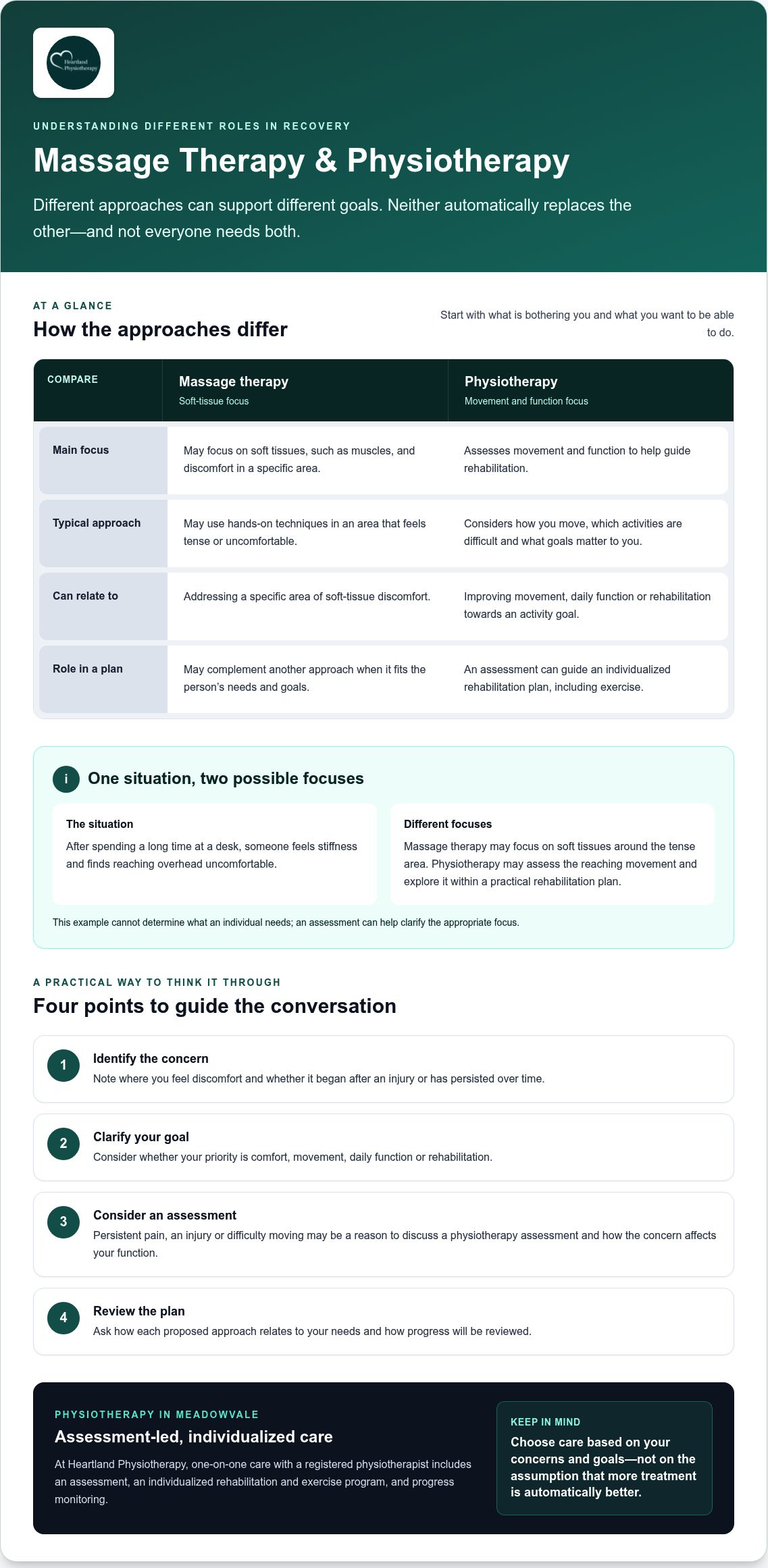
Massage therapy uses hands-on techniques to work with soft tissues, such as muscles. Physiotherapy assesses movement and function to guide rehabilitation. The approaches can have different roles, but that does not mean everyone needs both or that either approach suits every concern.
Massage therapy may focus on soft-tissue symptoms; physiotherapy connects assessment and rehabilitation to how you move and function.
What makes the two approaches complementary rather than interchangeable?
Massage therapy may involve hands-on work in an area that feels tense or uncomfortable. Physiotherapy takes an assessment-led view: a physiotherapist considers how you move, which activities are difficult and what goals matter to you, then can develop an individualized rehabilitation plan. For an overview of physiotherapy’s scope and approach, see What is Physical Therapy?
For example, someone may notice stiffness after spending a long time at a desk and also find it difficult to reach overhead comfortably. Massage therapy may focus on the soft tissues around the area of tension. Physiotherapy may assess the reaching movement and explore how to address it as part of a practical rehabilitation plan. This example cannot determine what an individual needs. An assessment can help clarify the appropriate focus.
To boost massage therapy and physiotherapy as part of a recovery plan, start with the goal rather than assuming both treatments belong in it. Is your priority addressing a specific area of soft-tissue discomfort, improving a movement or returning to an everyday activity? Your answer can guide a discussion about suitable care. Sometimes one approach may be enough; in other cases, different approaches may address different needs. The important point is to choose care based on your concerns and goals, not to add treatment automatically.
How to decide whether massage therapy and physiotherapy fit your needs
Begin with what is bothering you and what you want to be able to do. A specific goal, such as sitting through a workday more comfortably or returning to a regular walk, can help you decide what kind of support to discuss. Massage therapy and physiotherapy do not need to be combined by default.
- Identify the concern. Note where you feel discomfort and whether it began after an injury or has persisted over time.
- Clarify your goal. Consider whether your priority is comfort, movement, daily function or rehabilitation.
- Consider an assessment. Persistent pain, an injury or difficulty moving may be a reason to discuss a physiotherapy assessment and how the concern affects your function.
- Review the plan. Ask how each proposed approach relates to your needs and how you and your physiotherapist will review progress.
Treatment choices should reflect the person’s assessment, needs and functional goals. Reading Benefits of Massage Therapy can provide general perspectives on massage, but it cannot determine which care is suitable for your situation.
What should you consider before combining approaches?
Think about what you would most like to change: soft-tissue discomfort, a movement that feels limited or a daily activity that has become difficult. A registered physiotherapist can assess movement and develop an individualized plan around your rehabilitation goals. This gives you a practical basis for discussing whether another approach might complement the plan, rather than assuming more treatment is automatically better.
If you are considering physiotherapy in Meadowvale, you can explore Heartland’s physiotherapy care and learn how an assessment and individualized plan can relate to your movement goals.
Physiotherapy support in Meadowvale, Mississauga: a practical next step
If pain, an injury or a movement concern is affecting your routine, an assessment can help turn a general goal into a practical rehabilitation plan. At Heartland Physiotherapy in Meadowvale, you receive one-on-one care with a registered physiotherapist. The assessment considers your movement and daily needs, helping connect treatment to activities you want to work towards, such as walking comfortably or managing tasks at work.
Individualized physiotherapy planning connects each step of rehabilitation to the movements and daily activities that matter to you.
What can you expect when you seek physiotherapy at Heartland?
Your physiotherapist completes an assessment and uses it to develop an individualized rehabilitation and exercise program. Progress is monitored, so the plan can be reviewed in relation to your goals and how you are managing daily activities. If you are thinking about how to boost massage therapy and physiotherapy as complementary approaches, a physiotherapy assessment can help clarify your movement priorities and where rehabilitation fits. It does not mean you must combine treatments.
Heartland Physiotherapy serves people in Meadowvale and across Mississauga. Free on-site parking and same-day appointments are available, and you do not need a referral to be seen. Direct billing to most insurance companies is available; coverage depends on your plan.
If physiotherapy feels like a sensible next step for your movement goals, you can Book a physiotherapy appointment.
Take the next step towards movement that matters
It can be easier to recognize progress when you know what you are working towards. Before an appointment, consider how to notice changes in your routine: for example, whether a particular task feels more manageable or you are taking part in an activity you had been avoiding. These observations can make conversations about your care more specific and useful.
If you are considering how to boost massage therapy and physiotherapy as part of your recovery, let your priorities guide the discussion. You do not need to have every answer before you begin. A clear description of what has been difficult is a useful starting point for deciding what to explore next.
When you are ready, book a physiotherapy appointment with Heartland to discuss your movement goals and possible next steps.
Frequently Asked Questions
Can massage therapy and physiotherapy be used on the same day?
They may be scheduled on the same day, but whether that makes sense depends on your circumstances and care plan. If you are considering both, tell each practitioner what care you have already had that day and how you are feeling. This can inform a discussion about timing and whether combining approaches is suitable for you. The aim is to boost massage therapy and physiotherapy thoughtfully, not to fit in more treatment automatically.
Does massage therapy replace physiotherapy for an injury?
Massage therapy should not automatically be treated as a replacement for physiotherapy after an injury. Hands-on care may address soft-tissue discomfort, while rehabilitation may be relevant if the injury makes it difficult to climb stairs, lift an object or return to a usual activity. The appropriate focus depends on the injury and your needs. Persistent or limiting symptoms may be a reason to seek an assessment.
How can I tell whether I should consider physiotherapy for pain or movement problems?
Consider physiotherapy if pain or restricted movement is interfering with tasks you need or want to do, such as reaching a shelf, walking comfortably or completing work duties. An assessment can help clarify which movements are affected and whether a rehabilitation plan may be appropriate. If symptoms are severe, worsening or concerning, seek timely medical advice rather than relying on exercise or hands-on care alone.
Do I need a doctor’s referral to see a physiotherapist at Heartland?
No, you do not need a doctor’s referral to see a physiotherapist at Heartland. If you already have a referral, you can bring it to your first appointment, but it is optional. You can arrange an assessment directly if you have pain or movement concerns. Your private insurance plan may have its own requirements for reimbursement.