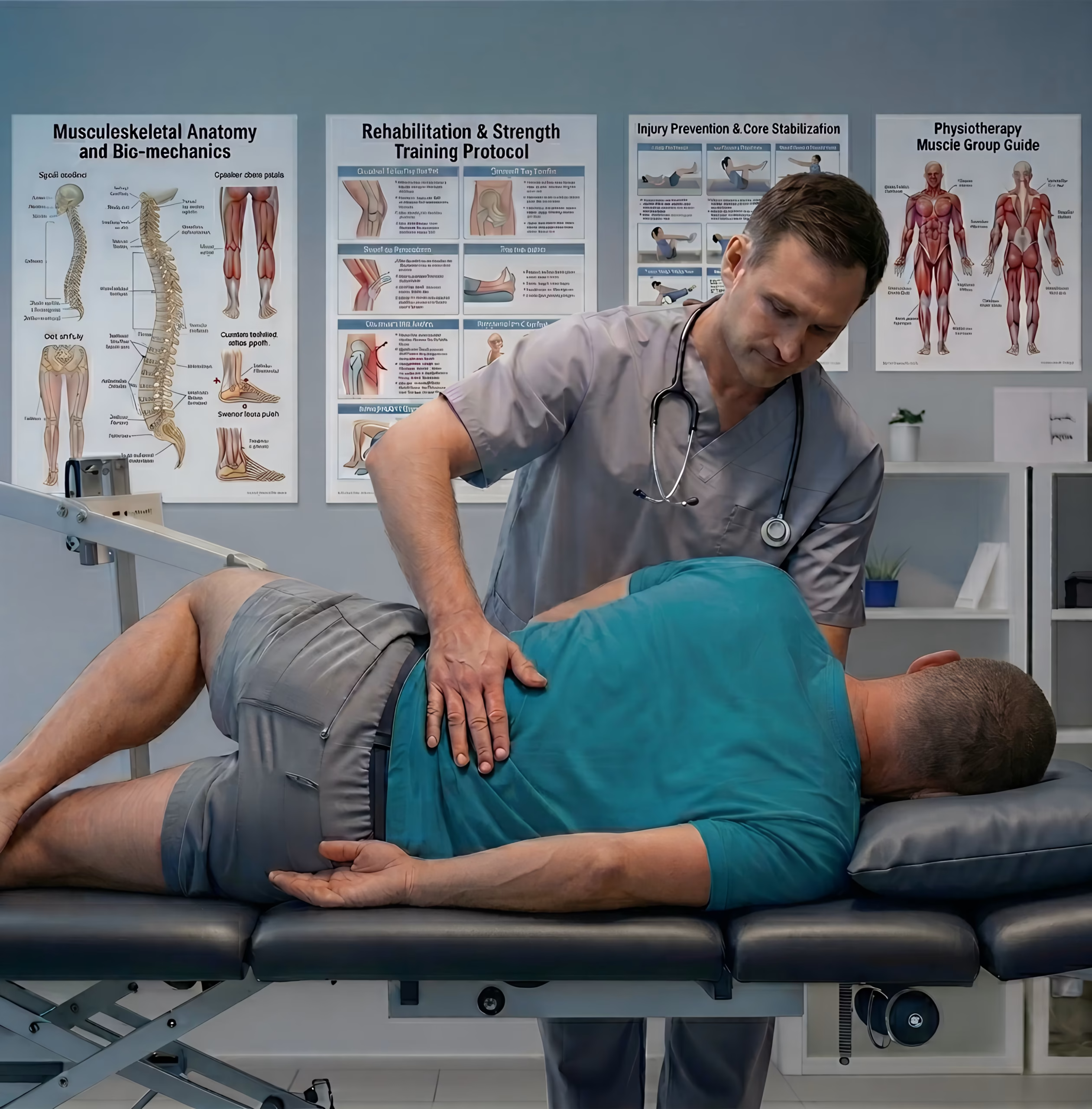
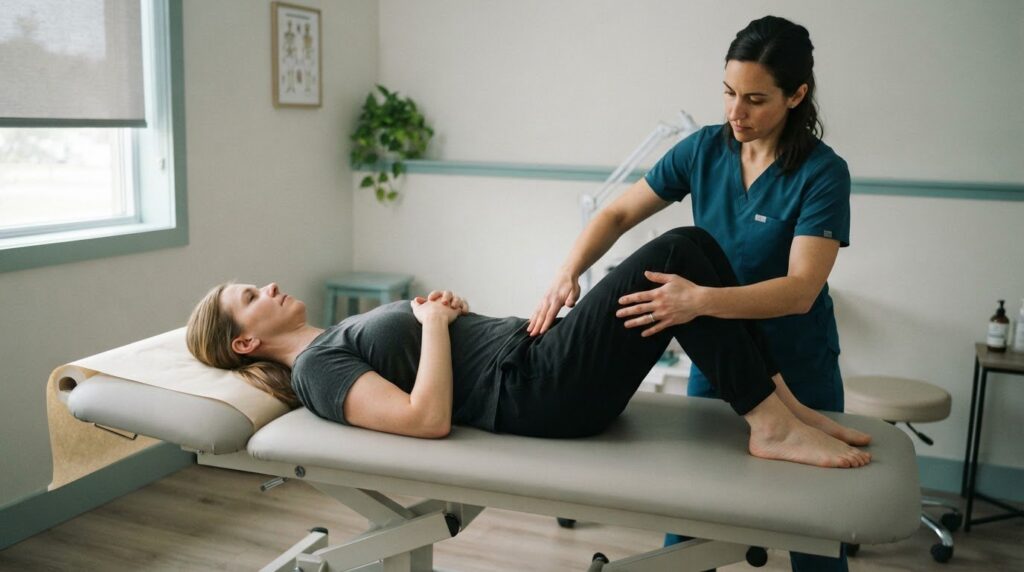
Sciatica care may involve more than the area that hurts. Osteopathy for sciatica can include hands-on manual therapy and movement guidance that consider how the back, hips and surrounding tissues work together. The aim is to ease strain and support comfortable movement, not to promise a quick fix.
When pain travels from your lower back into your buttock or leg, sitting, walking and everyday tasks can become difficult. This article explains what osteopathy involves, how an osteopathic assessment and treatment may help with sciatica, and how osteopathy can fit alongside other care, including exercise-based rehabilitation. You’ll also learn why care is tailored to your symptoms and movement needs, and when sciatica needs medical attention rather than manual therapy.
Key Takeaways
- Recognize common sciatica symptoms and understand why pain travelling into the leg can have different underlying causes.
- Learn how hands-on care may fit alongside exercise and other treatments as part of a broader approach to managing symptoms.
- See how an assessment of your symptoms, posture and movement can guide suitable osteopathic techniques and advice.
- If sciatica is affecting daily activities, Heartland Physiotherapy offers osteopathy treatment to help you explore appropriate care.
How Does Osteopathic Treatment Help With Sciatica?
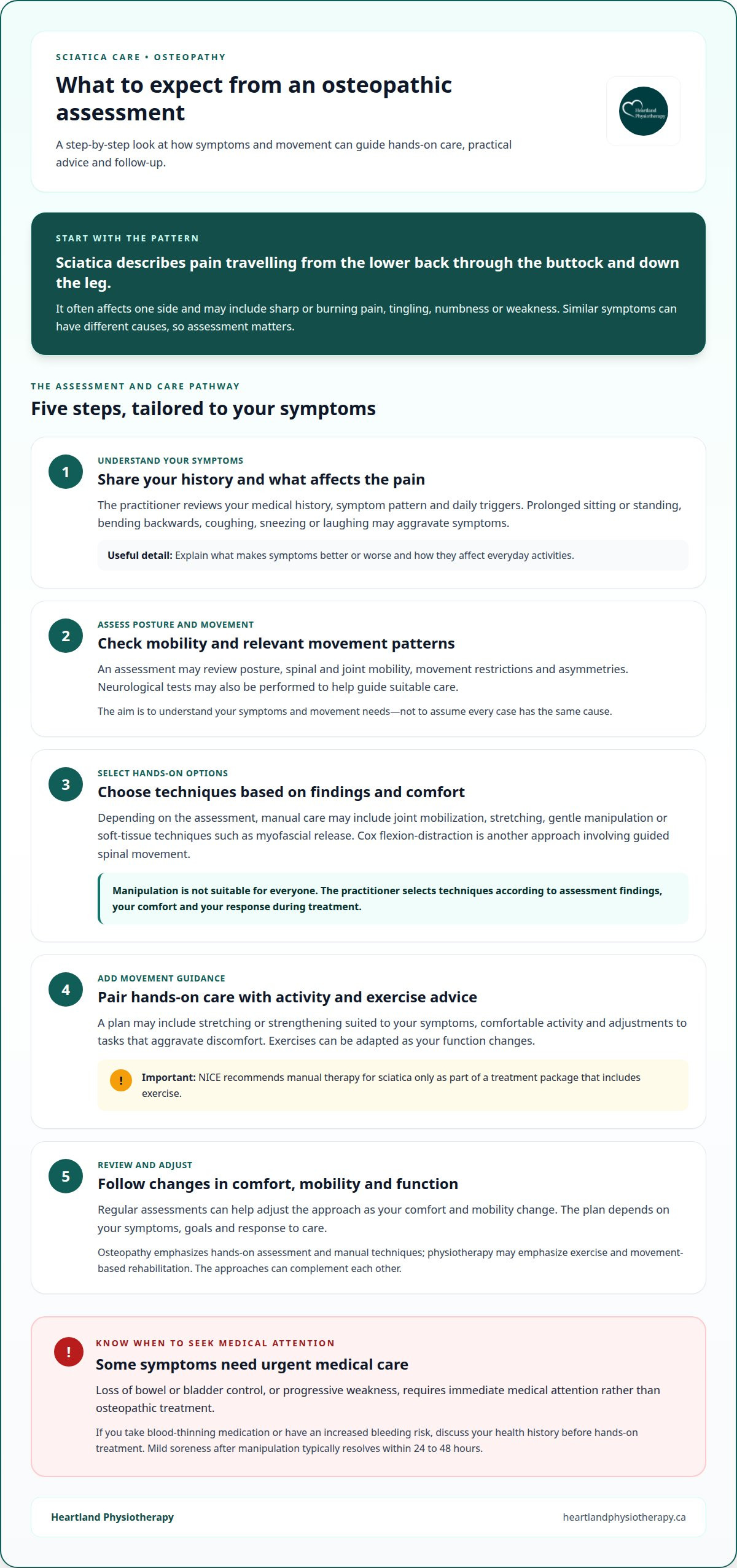
Sciatica describes pain that travels from the lower back through the buttock and down the leg along the sciatic nerve. It often affects one side and may involve sharp or burning pain, tingling, numbness or weakness. Causes can include a herniated disc, spinal stenosis, spondylolisthesis or muscle imbalances, so similar symptoms may have different sources.
Prolonged sitting or standing, coughing, sneezing, laughing and bending backwards may aggravate symptoms. For example, a long commute around Meadowvale can make sitting uncomfortable for someone with leg pain. During an assessment, a practitioner considers symptom patterns, movement and daily triggers to determine whether manual care may be appropriate.
A 2020 Cochrane review found moderate evidence that spinal manipulation provides short-term relief for low-back-related leg pain. This finding supports a possible treatment option, not a guarantee that osteopathy will help every person or address every cause.
Loss of bowel or bladder control and progressive weakness require immediate medical attention rather than osteopathic treatment. Mild soreness after manipulation typically resolves within 24 to 48 hours. People taking blood-thinning medication or with an increased bleeding risk should discuss their health history before hands-on treatment. Extended health coverage depends on the terms of an individual plan, so review your benefits. For decisions about osteopathic care, the relevant considerations include symptom pattern, medical history and how symptoms affect daily function.
Activity modification means adjusting daily activities to prevent worsening symptoms, such as changing tasks that aggravate discomfort. A herniated disc causes sciatica in 95% of cases, and 40-60% of people experience sciatica during their lifetime. Sciatica can cause tingling, numbness, or shooting pain. Persistent sciatica may accompany loss of bowel or bladder control and leg or foot weakness or numbness. The narrator rated their lower back pain 8 out of 10 before osteopathy treatment. This experience does not establish what another person will experience.
Combining osteopathy with other treatments
A care plan may combine hands-on treatment, movement guidance and changes to daily activities. The right approach depends on your symptoms, mobility and what makes the pain better or worse.
Soft Tissue Treatment and Muscle Tension
Soft tissue treatment uses hands-on techniques to address tightness in muscles and surrounding tissue. For instance, an osteopath may work around the lower back, buttock or piriformis muscle if tension affects comfortable movement. Myofascial release or massage may also be included. These approaches aim to ease tightness and support mobility alongside guidance on movement and activity patterns.
Exercises and Pain Management
Exercises build flexibility and help maintain movement between appointments. A practitioner may suggest stretching or strengthening suited to the person’s symptoms, then adjust the plan as function changes. NICE recommends manual therapy for sciatica only as part of a treatment package that includes exercise. Walking or other comfortable activity can complement a plan; exercises should match current tolerance.
An osteopathic assessment considers your medical history, pain triggers, posture and movement. The findings guide an individualized plan that may include joint mobilization, soft tissue techniques, spinal care, movement education and home exercises. For example, if symptoms worsen after prolonged sitting, the plan may include activity adjustments as well as hands-on treatment.
Osteopathy focuses on hands-on assessment and manual techniques, while physiotherapy may place greater emphasis on exercise and movement-based rehabilitation. The two approaches can complement each other. The choice depends on your symptoms, goals and response to care.
Regular assessments help adjust the approach as your comfort and mobility change.
Osteopathic approaches to sciatica
An osteopathic assessment begins with your medical history and a review of your symptoms, posture and movement. The practitioner may check spinal and joint mobility, identify movement restrictions and perform neurological tests. These findings help shape a plan around your symptoms and daily activities, rather than assuming every case has the same cause.
Manual techniques may include joint mobilization, stretching and gentle manipulation. Mobilization uses controlled movements to support easier joint motion. Manipulation applies a specific hands-on force and is not suitable for everyone. Cox flexion-distraction is another approach that uses guided spinal movement. The practitioner selects techniques based on assessment findings, your comfort and your response during treatment.
Some approaches focus on the pelvis, lower back or surrounding muscles. For example, an osteopath may assess pelvic movement when symptoms involve the sacroiliac region. Soft tissue techniques, including myofascial release, may address restricted tissue movement. The aim is to support function and mobility, not to claim that manipulation permanently corrects spinal alignment or removes nerve compression.
Posture and movement advice can make treatment more relevant to daily life. If bending or prolonged sitting aggravates symptoms, the practitioner can discuss ways to modify those activities and build movement back gradually. Recovery is followed through changes in comfort, mobility and function, with the plan adjusted as needed. For an assessment focused on your symptoms and movement, book an osteopathy assessment.
In some cases, an osteopath may recommend X-rays or MRI scans to investigate the cause. A manual assessment also considers asymmetries and restrictions in movement.
Heartland Physiotherapy: Physiotherapy Treatment
Heartland Physiotherapy offers Osteopathy Treatment for people in Meadowvale, Mississauga whose sciatica affects movement, comfort or daily activities. An assessment can help relate your symptoms to suitable hands-on care and practical movement guidance. Physiotherapy Treatment may also support exercise-based rehabilitation, while Massage Therapy may address muscle tension as part of your care.
Consider an assessment if back or leg pain keeps returning, limits your walking or makes work and everyday tasks difficult. Care can be tailored to your symptoms and goals, with other approaches considered when they may better suit your needs.
To discuss care for sciatica, contact Heartland Physiotherapy in Meadowvale, Mississauga.
Take the Next Step Towards Easier Movement
Leg pain can make everyday routines feel unpredictable. A useful next step is to discuss what you want to get back to, whether that means walking comfortably, managing a workday or moving with more confidence. Osteopathy for sciatica can be considered as part of a broader care plan guided by your symptoms, movement and goals.
You don’t need to have every answer before seeking support. Sharing what activities feel difficult and how symptoms affect your day can help shape a practical discussion about care. If you’re ready to explore options for your situation, contact Heartland Physiotherapy. A thoughtful starting point can help you move towards care that feels relevant to your needs.
Frequently Asked Questions
What is Osteopathy?
What is osteopathy is a hands-on form of manual therapy that considers how the body’s structure relates to its function. An osteopath may assess how different areas move and whether restrictions affect everyday activities. For example, difficulty turning or bending can help guide the assessment and the choice of suitable manual techniques.
What is Sciatica?
Sciatica is a term for symptoms linked to irritation or compression of the sciatic nerve. The discomfort may travel from the lower back into the buttock and leg, sometimes with tingling or numbness. The word describes a pattern of symptoms, not one specific cause, so identifying what may be contributing matters when considering care.
Can osteopathy help relieve sciatica symptoms?
Osteopathy for sciatica may help some people manage pain and movement difficulties through hands-on care and advice tailored to their symptoms. The approach depends on which activities are limited and how symptoms respond. For example, someone who struggles to bend comfortably may need a different plan from someone whose main difficulty is walking.
What does an osteopath do for sciatica?
An osteopath discusses your symptoms and health history, then assesses your movement to guide care. Treatment may involve manual techniques and advice on modifying activities that aggravate symptoms. Describe practical challenges, such as difficulty getting dressed or standing to prepare a meal, so the assessment can account for how sciatica affects your daily routine.