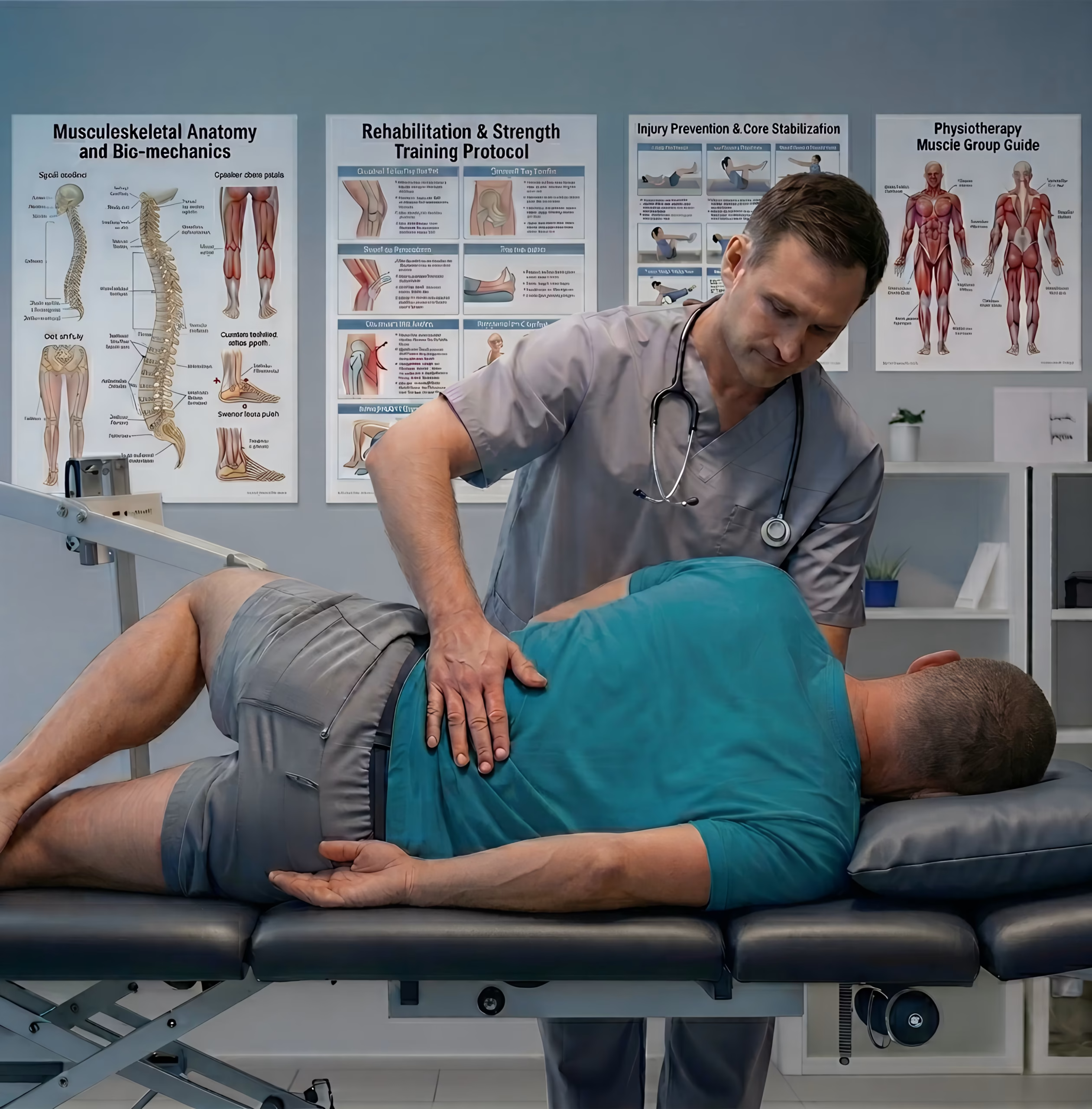

Physiotherapy may help shoulder pain with tailored exercises that strengthen weakened muscles, improve coordination and function, reduce stiffness, and support shoulder movement. Exercises suited to the cause of pain may also help reduce the chance of it returning. Rotator cuff problems, frozen shoulder, tendon irritation and osteoarthritis are among the conditions associated with shoulder pain. NHS guidance says treatment may include physiotherapy or exercises to do at home, depending on the cause.
If you’re wondering how physiotherapy helps with shoulder pain, it’s useful to look beyond the sore spot: symptoms can sometimes be related to the neck or another health condition. This article explains how exercise-based care may support shoulder function and help prevent recurring pain, describes common conditions associated with shoulder symptoms, and outlines when medical attention may be needed. You’ll also learn what an assessment can clarify and why it’s important to avoid movements that worsen your pain.
Key Takeaways
- Targeted exercises can build shoulder strength, support movement and help reduce the chance of recurring pain.
- Rotator cuff problems, frozen shoulder and tendon irritation are among the conditions that may be linked to shoulder symptoms.
- Gentle movement may help maintain flexibility, while painful movements can add strain.
- A physiotherapy assessment at Heartland Physiotherapy can help identify factors affecting your shoulder and guide suitable care.
Shoulder exercises and preventing recurring pain
Shoulder exercises can build strength and improve movement while reducing strain during everyday tasks. The right approach depends on your symptoms and their cause, such as a rotator cuff injury or osteoarthritis.
Physiotherapy and Strengthening Exercises
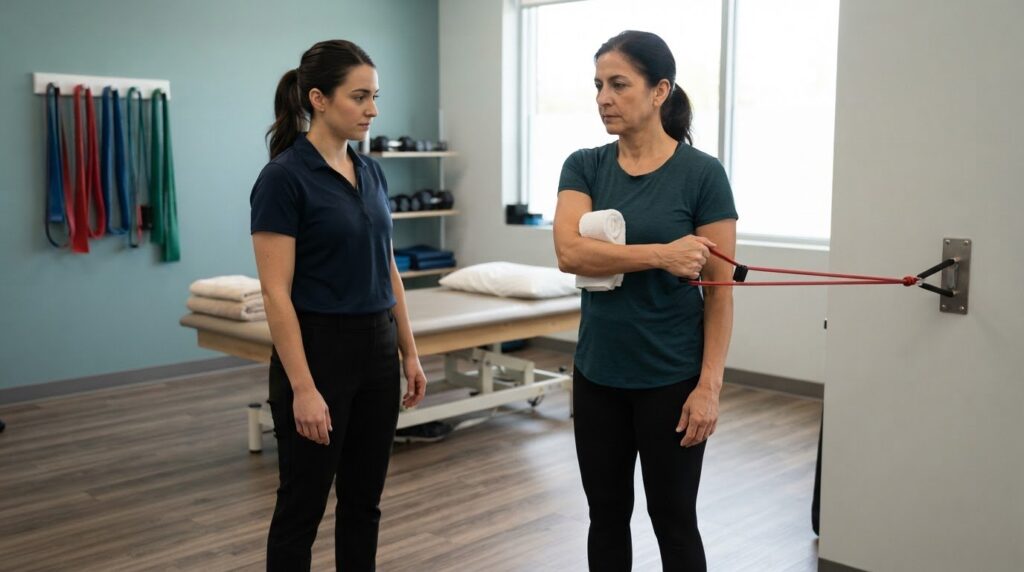
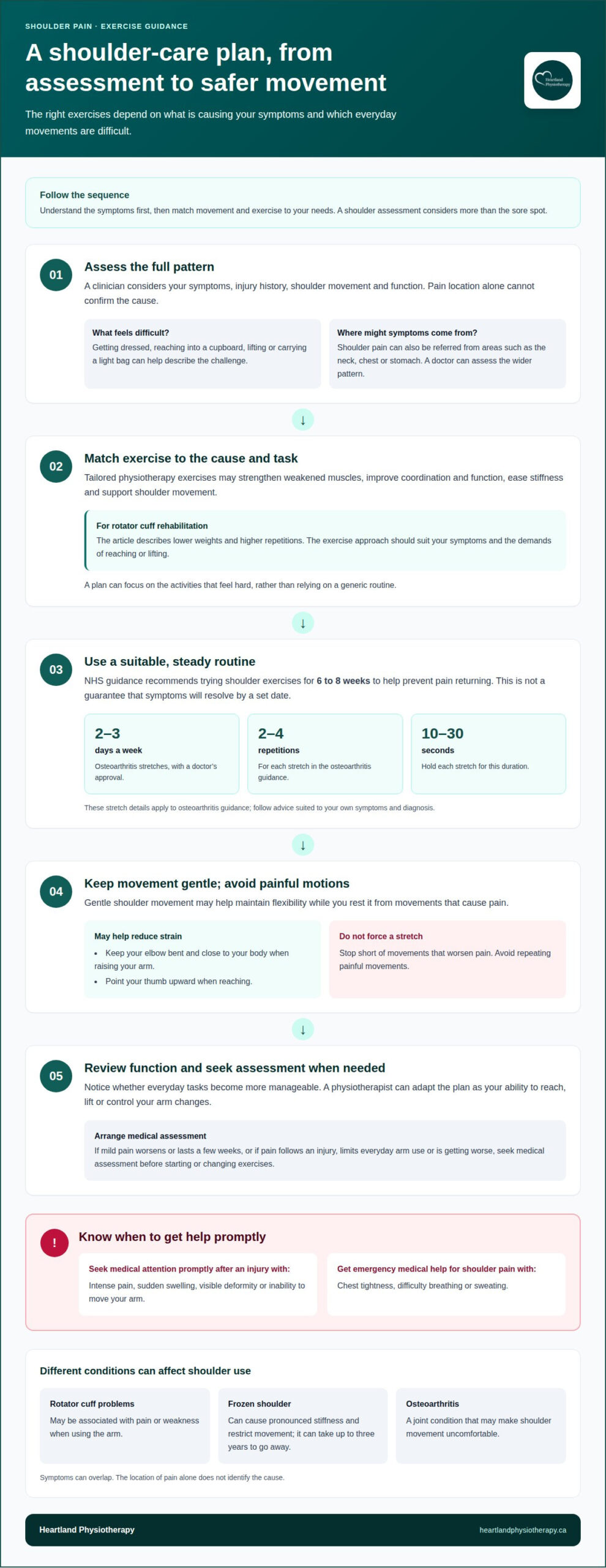
Physiotherapy uses tailored exercises to strengthen weakened muscles, improve coordination and function, ease stiffness, and increase shoulder movement. A physiotherapist can adapt exercises to your symptoms and the demands of reaching or lifting. For rotator cuff rehabilitation, lower weights and higher repetitions are recommended. A stretch should never force movement through worsening pain.
Preventing Recurring Pain
Regular, appropriate exercises may help maintain shoulder flexibility and reduce the chance of pain returning. NHS guidance recommends trying shoulder exercises for 6 to 8 weeks to help prevent recurrence. For osteoarthritis, stretches may be done two to three days a week with a doctor’s approval. Each stretch can involve 2-4 repetitions, held for 10-30 seconds.
To reduce strain, keep your elbow bent and close to your body when raising your arm. Point your thumb upward when reaching. These adjustments may help avoid aggravating tendons and inflammation. Ibuprofen may help with pain and swelling from rotator cuff problems, but medication doesn’t replace an exercise plan.
In Canada, a medical assessment considers your symptoms, injury history, shoulder movement and function. A clinician uses these findings to guide diagnosis and treatment.
Have mild shoulder pain assessed if it worsens or lasts a few weeks. Seek medical attention promptly after an injury that causes intense pain, sudden swelling, visible deformity, or inability to move your arm.
Shoulder pain accompanied by chest tightness, difficulty breathing or sweating calls for emergency medical help. Surgery or injections depend on the diagnosis and clinical findings; exercises alone can’t determine whether they’re needed.
Common conditions associated with shoulder pain
Several different conditions can cause shoulder symptoms, and the location of pain alone doesn’t identify which one is responsible. The rotator cuff is made up of muscles and tendons that help support shoulder movement. Irritation or a tear may be associated with pain or weakness when using the arm. Rotator cuff tears are more common after age 40, and their prevalence rises with each decade. Shoulder pain that comes from the joint often becomes more noticeable as the arm or shoulder moves.
Frozen shoulder can cause pronounced stiffness and restrict movement, sometimes making ordinary tasks difficult. It typically develops between ages 40 and 60, and can take up to three years to go away. Osteoarthritis is another possible source of shoulder pain. It affects the joint and may make movement uncomfortable. Although these conditions can all limit shoulder use, they are different problems, so symptoms alone cannot confirm the cause.
Pain felt in the shoulder can also be referred from another area. Possible sources include the neck, chest or stomach, with spinal nerve issues, heart disease and gallbladder disease among the associated conditions. Lung conditions, including cancer, can sometimes cause shoulder pain; smoking and being over 40 are identified risk factors for cancer. Consider the whole pattern, including whether movement changes the pain and whether other symptoms occur. A doctor can assess those details and determine whether the shoulder joint or another health issue needs attention.
About two million people visit a doctor each year for rotator cuff-related issues, illustrating how often these problems prompt medical attention. Frozen shoulder can make it virtually impossible to move the shoulder for weeks or months, and it can take up to three years to resolve. The degree of restriction and the duration of symptoms vary, so assessment is useful when pain or stiffness interferes with ordinary use of your arm.
Can shoulder exercises or physiotherapy help shoulder pain?
Shoulder exercises may help restore comfortable movement and build capacity for daily tasks. NHS guidance says treatment may include physiotherapy or exercises at home, depending on the cause. Understanding how physiotherapy can help with your shoulder pain starts with identifying activities that feel difficult, such as getting dressed, reaching into a cupboard or carrying a light bag. The exercise approach can then address those specific demands.
A physiotherapist can assess your movement, strength and the tasks that bring on symptoms. This helps clarify whether your main challenge is reaching, lifting or controlling your arm during activity. Your plan can progress as those tasks become more manageable, rather than relying on a generic routine or increasing effort without direction.
Consistency matters. NHS guidance recommends trying shoulder exercises for 6 to 8 weeks to help stop pain returning. This is a period for working with a suitable routine, not a guarantee that symptoms will resolve by a set date. Progress can be judged by changes in everyday function, such as reaching for a coat or placing an item on a shelf.
If shoulder pain follows an injury, limits everyday use of your arm or is getting worse, seek medical assessment before starting or changing exercises. The cause of your pain and your current abilities shape which movements are appropriate. A physiotherapy assessment can help connect these factors to a practical plan for returning to valued activities.
A gentle approach means continuing to move your shoulder to help maintain muscle flexibility while resting it from painful movements. The distinction is simple: keep the shoulder moving gently, but avoid movements that cause pain. This supports flexibility without repeating painful movements.
Heartland Physiotherapy
For people in Meadowvale, Mississauga, Heartland Physiotherapy offers a local place to discuss shoulder concerns and appropriate next steps. An assessment can consider how your symptoms affect everyday activities and help shape care around your needs.
If shoulder discomfort is limiting work, household tasks or recreation, Physiotherapy Treatment may help address movement and function. Care can be guided by your concerns and the demands of your daily routine.
Contact Heartland Physiotherapy to discuss your shoulder concerns.
Take a considered next step
Shoulder care should relate to the movements you want to manage in daily life, from getting dressed to reaching overhead. Understanding how physiotherapy may help with your shoulder pain can make it easier to discuss what matters most, including which activities feel limited and what you hope to return to.
Heartland Physiotherapy offers Physiotherapy Treatment, Massage Therapy and Osteopathy Treatment. If shoulder symptoms continue to affect your routine, a conversation can help you explore care suited to your concerns and goals.
Contact Heartland Physiotherapy to discuss your shoulder pain and possible next steps. With a clearer direction, you can move forward with greater confidence.
Frequently Asked Questions
What are common causes of shoulder pain?
Shoulder pain can come from the rotator cuff, tendons, muscles, frozen shoulder or osteoarthritis. The source isn’t always the shoulder itself: problems involving the neck, chest or stomach can refer pain to that area. Notice whether symptoms change with shoulder movement or occur alongside other concerns, and share those details during a medical assessment.
Which treatments help relieve shoulder pain?
Treatment depends on the cause and how the shoulder responds to movement. It may include a clinician-guided exercise plan, home exercises or changes to activities that aggravate symptoms. NHS self-care guidance says shoulder pain usually needs self-care measures for 2 weeks before it starts to ease. If pain is worsening or limiting daily tasks, seek medical advice.
How can you prevent shoulder pain from returning?
Build shoulder-demanding activities back gradually rather than jumping straight into heavy lifting or long periods of overhead work. Break up repetitive tasks, vary your movements and allow recovery between demanding activities. For example, alternate desk tasks with a brief change of position, or turn to professional relocation services like JAS Removals & Storage during major moves to prevent overloading your joints. If the same activity repeatedly brings symptoms back, a clinician can help identify ways to adjust it.