
A key point when choosing hands-on care is that similar symptoms can call for different approaches. Understanding what osteopathy is can help you compare it with massage therapy, chiropractic care and physiotherapy, and consider which approach may suit your needs.
Osteopathy is a form of hands-on care that assesses how the body’s structure and movement work together. An osteopathic practitioner may use manual techniques to address discomfort, muscle tension or mobility concerns, tailoring care to your presentation. If you’re comparing options, it’s reasonable to want a clear explanation of what treatment involves and what to expect. This article explains how osteopathy works, the concerns it may address, how it compares with other types of care, and what to consider when choosing a practitioner in Canada.
Key Takeaways
- Osteopathic care uses hands-on assessment and techniques to consider how different parts of the body move and function together.
- People may explore it for concerns such as back or neck discomfort, muscle tension, headaches or limited mobility.
- Osteopathy, massage therapy, chiropractic care and physiotherapy take different approaches; the right fit depends on your symptoms and care goals.
- When considering treatment, look for relevant practitioner education and understand how professional titles are regulated where you live.
What Is Osteopathy?
Osteopathy is a drug-free, hands-on form of care that considers how the body’s structure and movement relate to function. If you’re asking, “What is osteopathy?” it’s an approach that views the body as an interconnected unit, rather than treating a sore area in isolation. It also recognizes the body’s capacity for self-regulation. This perspective guides assessment; it doesn’t mean every symptom has one cause or that treatment replaces medical care.
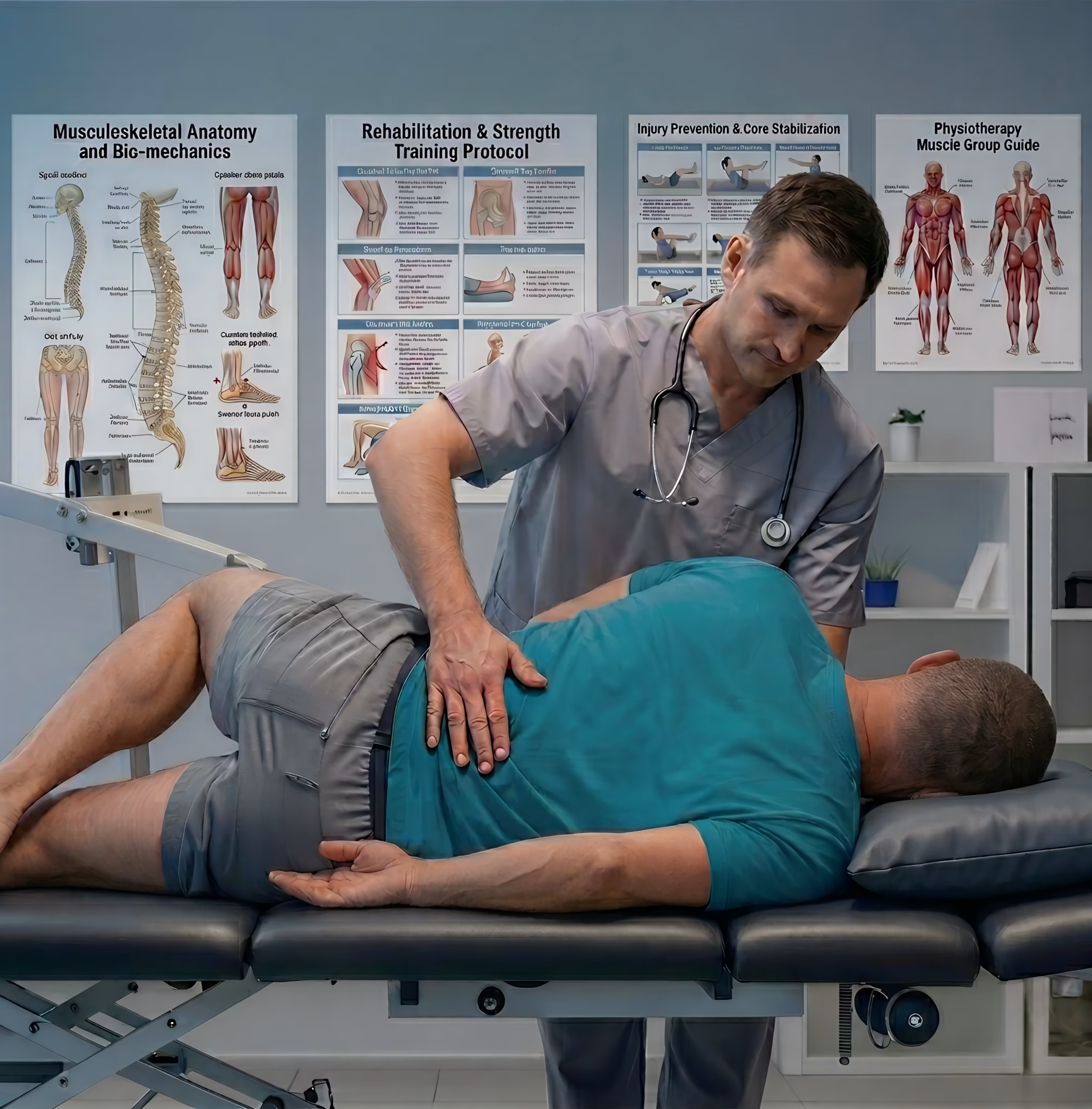
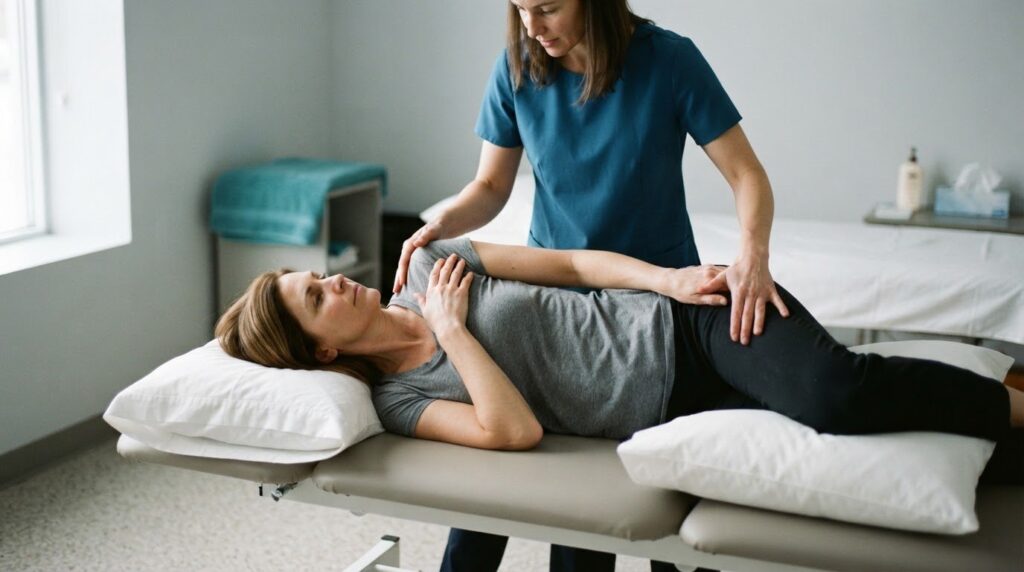
An osteopath asks about your symptoms, health history and daily activities, then observes your posture and movement. They may use hands-on examination to assess how your tissues and joints are functioning. In practical terms, osteopathy connects your concern with movement patterns elsewhere in the body and uses that assessment to shape a plan around your needs.
Treatment may involve joint mobilization, soft-tissue stretching, gentle manipulation or, when suitable, a short, sharp spinal thrust. The practitioner selects techniques based on the assessment and explains what they involve. The aim is to support comfortable movement and function, not to force a joint or promise a cure. An appointment may also include guidance on how everyday activities relate to your concern.
Conditions Addressed by Osteopathic Care
People may seek manual osteopathic care when symptoms make everyday activities difficult. For example, shoulder pain while reaching overhead can make getting dressed or putting dishes away uncomfortable.
Conditions people seek treatment for
Reasons for seeking care can include back discomfort after a long drive, hip stiffness on walks or shoulder pain when lifting a child. The activity affected matters: discomfort during a commute raises different questions from pain during sport. Describing what daily activities are limited helps explain why an assessment may be useful.
Symptoms addressed
Symptoms can include aching, stiffness, muscle tightness or restricted movement. For instance, neck discomfort that makes reversing a car difficult differs from soreness after gardening. Note when it begins, which movement brings it on and what task it interrupts. These details help clarify the concern being assessed.
Commonly treated conditions
People may seek manual osteopathic care for back or neck pain, headaches, posture-related discomfort and limited mobility. Someone with ankle stiffness after a sprain may find stairs uncomfortable, while another person may notice shoulder tightness during swimming. These examples describe reasons for assessment, not a diagnosis. The practitioner considers symptoms and activity limits together.
Manual osteopathic care is a hands-on practice that may include manipulation. It is distinct from osteopathic medicine, which is a medical profession in some countries. Manipulation may not be appropriate for people with conditions such as prolapsed discs, joint infections or bone disease.
How Do I Choose a Qualified Osteopathic Practitioner?
In Ontario, the title “osteopath” is restricted: according to the College of Physicians and Surgeons of Ontario, only its members may use it. The Medicine Act, 1991 was proclaimed in Ontario in 1993, and Section 9 addresses this title restriction. The Canadian Academy of Osteopathy describes programs with over 4200 hours of anatomy, physiology, osteopathic theory, hands-on labs, clinical training, safety and ethics. Review a practitioner’s education and how they explain their qualifications and approach.
Coverage depends on your extended health policy. A referral usually isn’t needed to see an Osteopathic Practitioner, though some plans require one. During assessment, the practitioner considers your whole-body movement and symptoms before choosing manual techniques. Direct techniques apply pressure towards a restricted area; indirect techniques work with its position of ease. Balancing approaches aim to support comfort, while articular techniques focus on joint movement. Lymphatic techniques may also be used.
Manipulation may be unsuitable with a prolapsed disc, joint infection or bone disease. The practitioner assesses your health history and symptoms before selecting techniques; a gentle or non-thrust approach may be more appropriate.
Comparison with Massage, Chiropractic Care and Physiotherapy
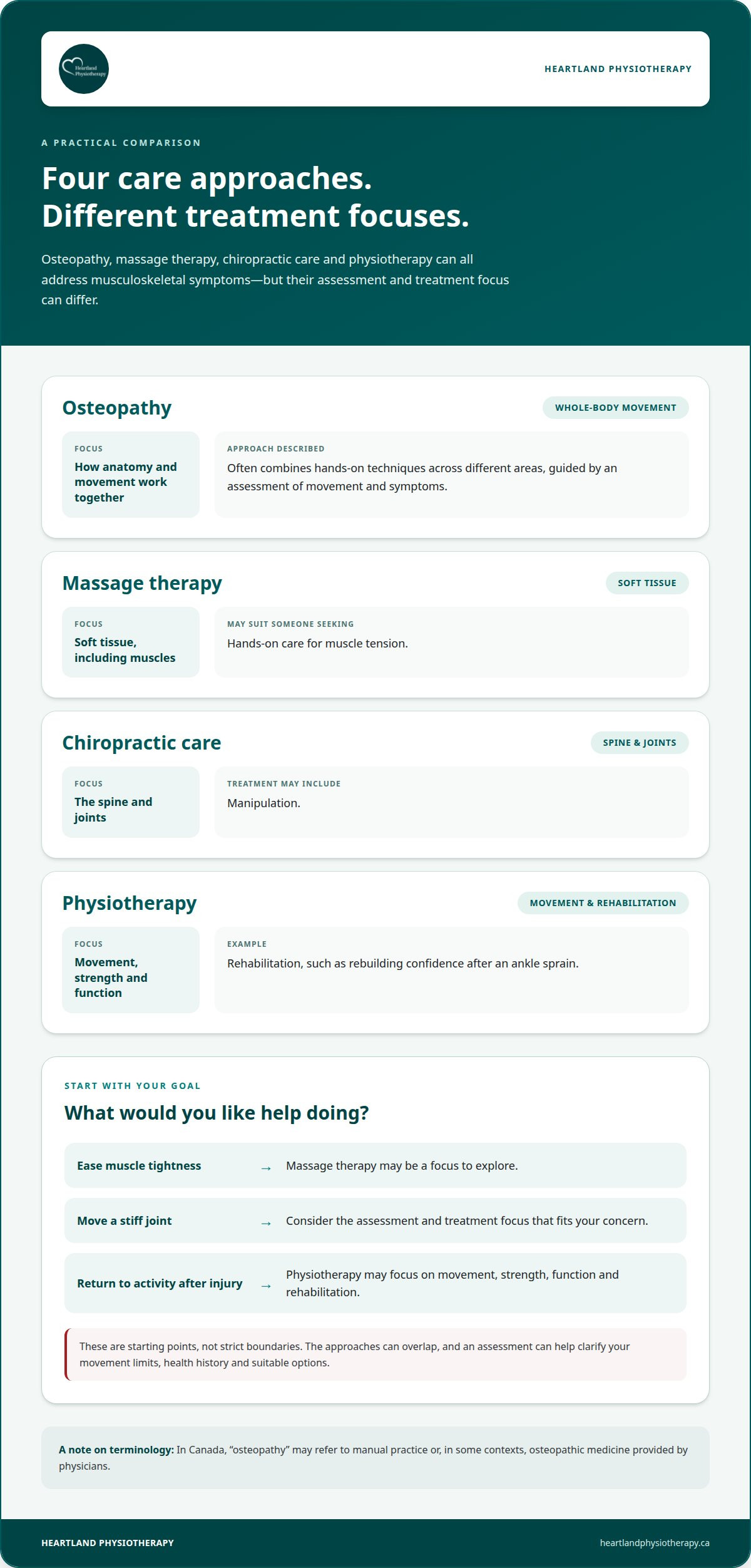
These approaches can all address musculoskeletal symptoms, but differ in their assessment and treatment focus. Osteopathy takes a whole-body view of anatomy and movement, often combining hands-on techniques across different areas. For example, an osteopathic practitioner may assess hip and back movement when someone reports discomfort while walking. The aim is to understand how a person’s concerns may relate, rather than assume a single cause.
Massage therapy focuses more directly on soft tissue, including muscles, and may suit someone seeking hands-on care for tension. Chiropractic care often emphasizes the spine and joints, and treatment may include manipulation. Physiotherapy commonly focuses on movement, strength, function and rehabilitation, such as rebuilding confidence after an ankle sprain. These fields can overlap, and practitioners may use hands-on care within different treatment plans.
Choose based on your symptoms and what you want help doing: easing muscle tightness, moving a stiff joint or returning to activity after an injury. An assessment can clarify movement limits, health history and suitable options. In Canada, osteopathy may refer to manual practice or, in some contexts, osteopathic medicine provided by physicians. Neither manual care nor exercise replaces medical evaluation when symptoms suggest serious illness or may require surgery.
Heartland Physiotherapy
Heartland Physiotherapy provides Osteopathy Treatment for people in Meadowvale, Mississauga, alongside physiotherapy, massage therapy and chiropractic care. If a symptom affects a daily task, such as reaching overhead or getting through a workday comfortably, an assessment can help clarify your concerns and guide the next steps. Care is shaped around your needs and goals, rather than choosing a treatment by name alone.
Osteopathy Treatment may suit you if you’re considering hands-on care for discomfort or restricted movement. Massage Therapy focuses on concerns involving muscle tension. Physiotherapy Treatment can support assessment and rehabilitation when pain or injury affects function, while Chiropractic Care offers another approach to musculoskeletal concerns. For someone in Meadowvale weighing these options, start with the activity you want help with, such as turning your neck or returning to regular movement. Your symptoms, health history and goals help guide the discussion.
If you’re in Meadowvale or elsewhere in Mississauga and would like to discuss care for your concern, contact Heartland Physiotherapy to book an assessment.
Frequently Asked Questions
Are there any side effects?
Mild soreness or stiffness can follow treatment and typically settles within a day or two. Pay attention to how you feel after the appointment, especially if the treated area is tender. Share any reaction with your practitioner before another session so they can consider your response when discussing the next steps.
Can Osteopathy help with stress and anxiety?
Osteopathy is not a substitute for mental health support. If muscle tension accompanies a stressful period, you can mention it during an appointment so the practitioner understands your concerns. For persistent anxiety, panic or difficulty managing daily life, speak with a health professional about appropriate mental health care.
How is Osteopathy different from other healthcare professions like physiotherapy, registered massage therapy or chiropractic medicine?
The useful distinction is often the goal of care, rather than the profession’s name. Consider whether you want support with a particular activity, such as returning to recreational sport, managing tension after desk work or moving more comfortably. A clear explanation of the proposed plan can help you decide whether its focus matches your needs.
How is it different from other therapies?
Other therapies may use different methods and serve different purposes, so they aren’t interchangeable simply because they involve hands-on care. Before treatment, clarify what the session is intended to address, which techniques are proposed and what alternatives may be considered. This gives you a practical basis for deciding whether the approach feels appropriate for your concern.