The movement that feels easiest may be the best place to start when your lower back hurts. At-home exercises for lower back pain can include gentle options you do standing or lying down, rather than forcing your body into a position that feels uncomfortable.
It’s understandable to feel cautious about exercising when your back is sore. This guide walks you through ways to choose comfortable movements, try simple stretches and build glute strength with bridges. You’ll also learn how to start gently, adjust the exercises to how your back feels and stop if a movement causes pain. The goal is a practical routine that supports movement without asking you to push through discomfort.
Key Takeaways
- Choose gentle movements that feel comfortable, and stop if an exercise causes pain.
- Try a single knee-to-chest stretch by drawing one knee toward your chest, then switching sides.
- Start bridges with five repetitions a day and hold each raised position for three deep breaths.
- Notice whether standing or lying down feels easier, and consider a physiotherapy assessment if back pain persists or affects daily activities.
How do I exercise to reduce low back pain?
Begin with gentle movements that feel comfortable, and stop if your pain increases. Keep pelvic tilts and cat-cow controlled, without forcing your back or shoulders.
Stretch one knee toward the chest
- Lie on your back with knees bent and feet supported. Draw one knee toward your chest until you feel a comfortable stretch in your lower back or buttock, then switch legs. Hold each side for 15 to 30 seconds and repeat 2 to 4 times. Move gently; don’t pull into pain.
Stretch hamstrings with a doorway or towel
- For a doorway stretch, lie near the doorway and raise one leg against its frame, keeping the other leg relaxed. With a towel, support the back of your thigh and gradually straighten your bent knee. Hold a comfortable stretch at the back of your thigh for 15 to 30 seconds, or up to 1 minute if possible. Don’t force the knee straight.
Perform a seated lower-back rotation
- Sit upright, then slowly turn your trunk to one side without forcing your shoulders forward. Hold for 10 seconds and return to the starting position. Repeat 3 to 5 times on each side, twice a day. For a lying rotation, keep your back flat, knees together and bent, then gently lower them to each side; hold for 5 to 10 seconds.
Perform a lower-back rotation
- Use a small, comfortable range and stop if movement worsens your symptoms. For core and back strength, try gentle pelvic tilts, cat-cow, or bird dog; start with a few repetitions and build gradually. Adapt the range if you have sciatica, are pregnant, or are older, and seek professional guidance if you’re unsure. During acute pain, avoid movements that make symptoms worse. Seek urgent medical attention for severe or rapidly worsening symptoms. In Ontario, a doctor or physiotherapist can advise you about exercising with lower back pain.
Bridges for glute strengthening
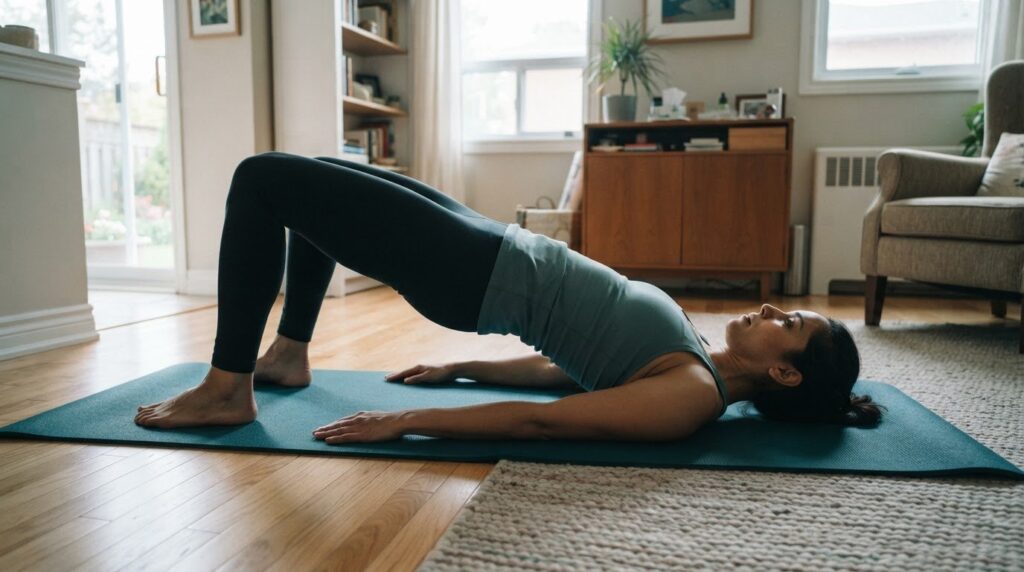
A bridge works your glute muscles and hips while you control your pelvis. Move smoothly, keep your feet grounded, and stop if the exercise causes pain.
- Lie on your back with your knees bent and feet flat, about hip-width apart. Relax your arms beside you and find a comfortable position, letting your lower back rest naturally. Before lifting, gently tighten your stomach muscles and keep your knees pointing straight ahead.
- Press through both feet and lift your hips toward the ceiling. Raise your pelvis only as far as you can without arching your back or feeling pain or pulling. Keep your shoulders and feet on the floor, aiming for a straight line from your shoulders to your knees.
- Hold the raised position long enough to take three deep breaths, then lower your hips slowly and return to the starting position. Keep your pelvis controlled as you lower. Begin with five repetitions a day, then gradually increase the number as the movement becomes easier, up to 30.
- For a smaller movement, practise a pelvic lift: tighten your abdomen, raise your buttocks slightly, and hold for 1 to 2 seconds before lowering. If either version aggravates symptoms, stop rather than pushing through. Ask your doctor about safe exercise options if you’re beginning after a back injury.
If you’re unsure how to adjust a bridge or it repeatedly brings on discomfort, physiotherapy guidance for back pain can help you find an appropriate approach.
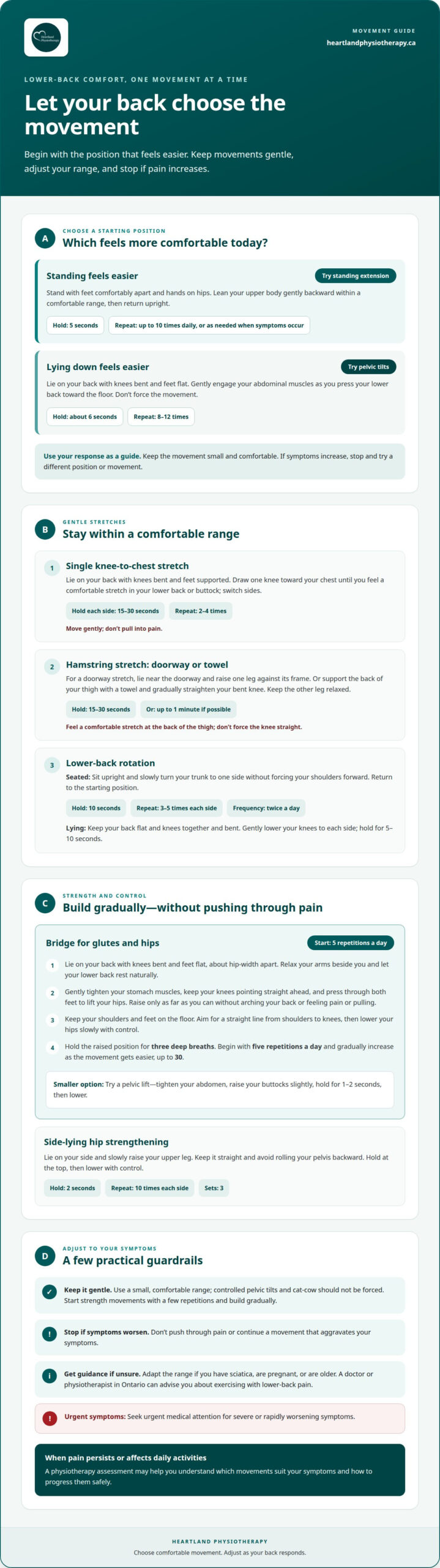
Exercises for pain eased by standing or lying down
Notice which position feels most comfortable: standing, lying down, or sitting. Choosing at-home exercises for lower back pain starts with your response, not a forced stretch or fixed direction. Try a gentle movement in the easier position, and stop if your symptoms increase.
- If standing feels easier, try a standing lumbar extension. Stand with feet comfortably apart and hands on your hips. Slowly lean your upper body backward within a comfortable range, then return upright. Hold the backbend for 5 seconds and repeat up to 10 times daily or as needed when symptoms occur.
- If lying down feels easier, practise pelvic tilts. Lie on your back with knees bent and feet flat. Gently engage your abdominal muscles as you press your lower back toward the floor, without forcing the movement. Hold each repetition for about 6 seconds, then relax. Repeat 8 to 12 times while breathing normally.
- For hip strengthening while lying on your side, raise your upper leg slowly. Keep the leg straight and avoid rolling your pelvis backward. Hold the top position for 2 seconds, then lower with control. Repeat 10 times on each side for 3 sets, stopping if the movement increases pain.
- Use your response to choose a starting position and direction of movement. If standing extension feels easier, keep the movement small; if lying pelvic tilts feel more comfortable, start there. This is a practical way to adapt at-home exercises for lower back pain to your symptoms. Don’t push through worsening symptoms. A therapist can help tailor rehabilitation movements if exercise or positioning remains difficult.
Heartland Physiotherapy
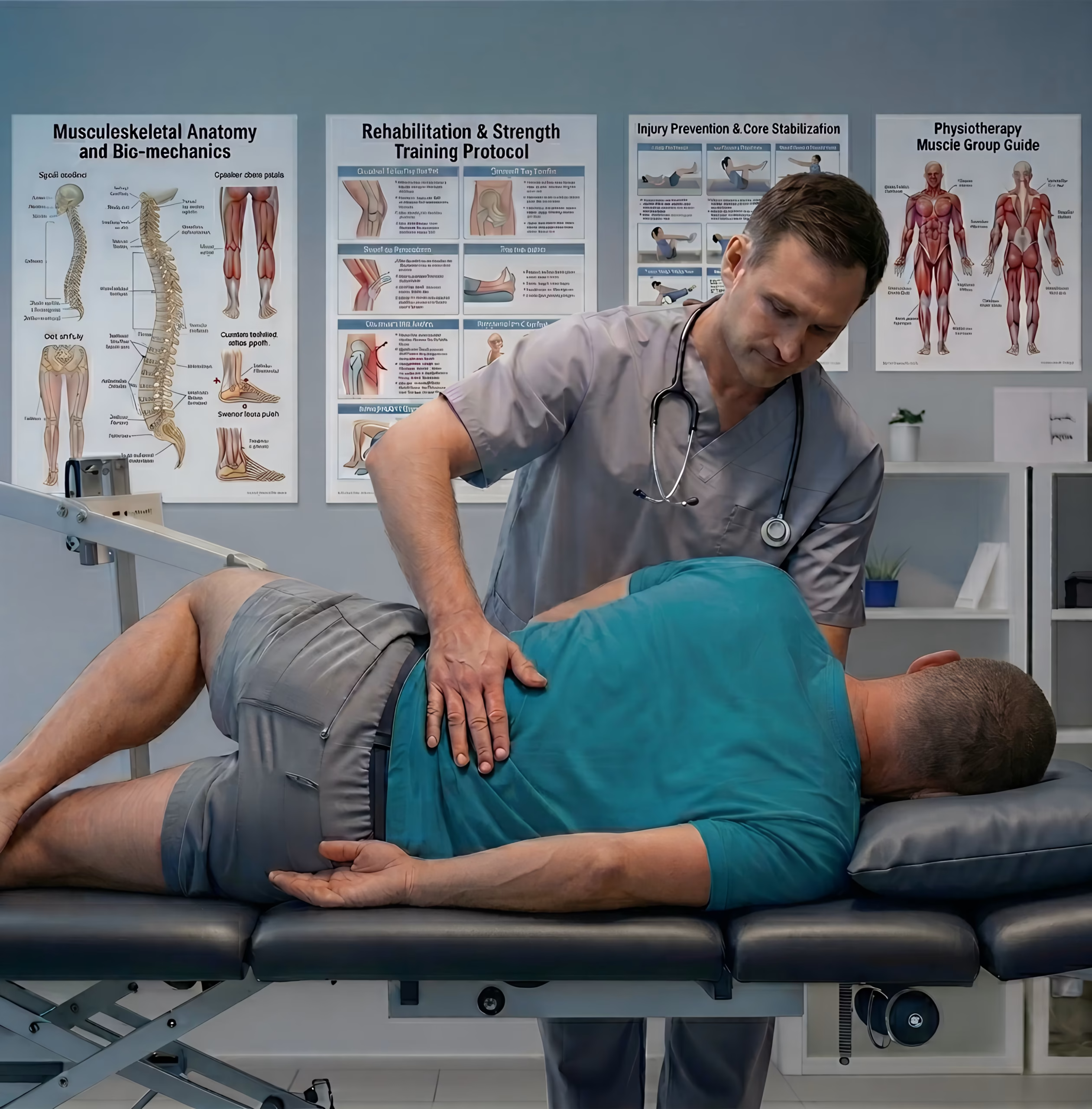
Heartland Physiotherapy can help you understand which movements suit your symptoms and how to progress them safely. For people in Meadowvale and nearby Mississauga communities, an assessment may help if lower back pain persists, limits daily activities, or makes it difficult to choose comfortable exercises.
Adjust exercises if your symptoms change or certain positions consistently feel uncomfortable. A physiotherapist can assess your movement, discuss your goals, and tailor rehabilitation recommendations to your needs. This can help you decide whether to continue exercising at home and when to seek further support.
For guidance on exercising with lower back pain, contact Heartland Physiotherapy.
Take your next step toward comfortable movement
Building confidence with movement means noticing how your back responds, not pressuring yourself to follow a fixed routine. Keep track of which positions and everyday activities feel manageable, and share those observations if you seek support. They can help shape a plan around your mobility, goals, and daily demands.
Heartland Physiotherapy offers Physiotherapy Treatment, Massage Therapy, and Osteopathy Treatment. If back pain continues to affect your routine or you’re unsure how to progress your activity, an assessment can help you explore suitable next steps. The right at-home exercises for lower back pain depend on your symptoms and how movement feels over time.
Contact Heartland Physiotherapy to discuss support for your back pain. A thoughtful next step can help you move forward with greater confidence.
Frequently Asked Questions
How can I make my lower back stronger?
Build strength gradually with regular movement and exercises that engage your trunk, hips, and legs. If you’re not very active, begin with a couple of minutes of daily aerobic activity, such as walking, then increase the time as it becomes manageable. Progress one part of your routine at a time, such as duration or repetitions.
How do you heal a weak lower back?
If your lower back feels weak, gradually rebuild strength and confidence through everyday movement. Start with activities you can manage, then increase them progressively instead of resting completely or pushing through pain. If weakness persists, affects daily tasks, or follows an injury, a healthcare professional can assess your movement and guide your next steps. For international readers or travellers seeking rehabilitation overseas, resources for fisioterapi Singapura can connect you with professional care to rebuild mobility safely.
How should I feel while exercising?
You may feel gentle muscular effort or a comfortable stretch, but exercise shouldn’t increase your symptoms. Stop if you feel pain, and don’t force your body into a deeper position. If you’re unsure whether a sensation is expected or how to do an exercise, ask a doctor or physiotherapist for guidance.
What causes low back pain?
Low back pain can follow a muscle strain or back injury, and sometimes there’s no obvious trigger. Repetitive physical demands may also contribute to discomfort. The likely cause depends on when symptoms began, where they occur, and how they change. Persistent pain or pain that interferes with daily activities warrants an individual assessment.
Which at-home exercises are recommended for lower back pain?
Choose movements that your back tolerates, such as gentle mobility work or a simple strengthening exercise. A practical starting point is one stretch and one strengthening movement, with each performed for 10 repetitions. Keep the range comfortable, move with control, and stop if symptoms increase. The right exercise choice depends on how your back responds.