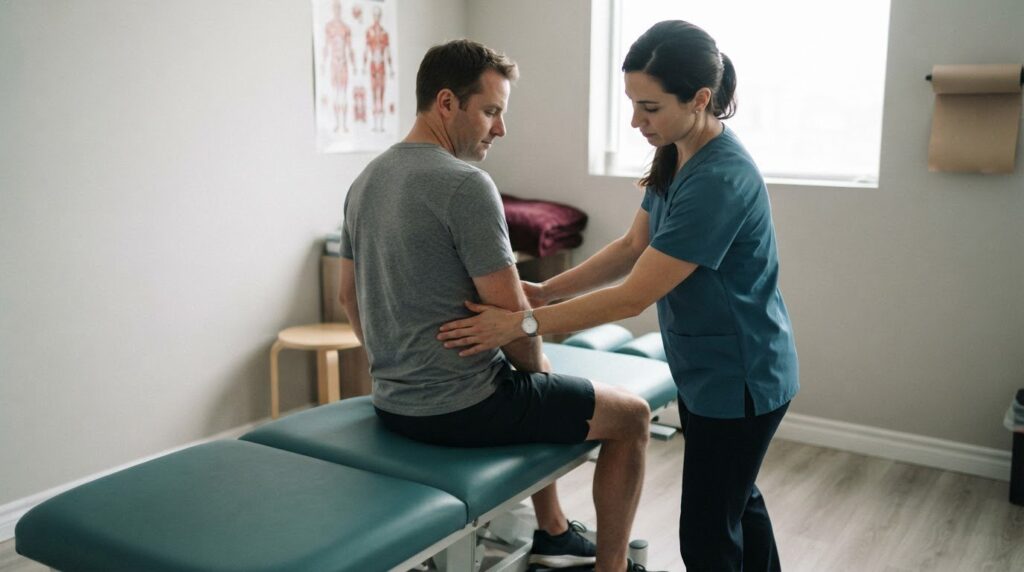
Hands-on treatment can mean different kinds of care. The choice between osteopathy vs massage vs physiotherapy depends on what you want help with: massage therapy focuses on muscles and soft tissues, osteopathy takes a broader view of how the body moves and functions, and physiotherapy focuses on restoring movement and function through rehabilitation. The approaches can seem similar, especially because all three may use hands-on techniques.
This guide explains what each treatment may involve, which concerns it may suit, and how osteopathy, massage, and physiotherapy can complement one another. You’ll also find practical ways to choose, based on your symptoms, movement goals, and whether you’re looking for hands-on relief, a structured rehabilitation plan, or a combination of approaches.
Key Takeaways
- Match the approach to your main need: soft-tissue tension, broader movement concerns, or a structured rehabilitation goal.
- Compare massage and osteopathy by their techniques and assessment focus, not just by the fact that both use hands-on care.
- Consider how movement, posture, and areas beyond the immediate discomfort may inform an osteopathic assessment.
- Explore how massage therapy, physiotherapy, osteopathy, or chiropractic care may fit your symptoms and goals at Heartland Physiotherapy.
Can Osteopathy and Physiotherapy Work Together?
These approaches can complement one another. Choosing among them depends on your symptoms, injury, and goals.
Physiotherapy for Injuries and Rehabilitation
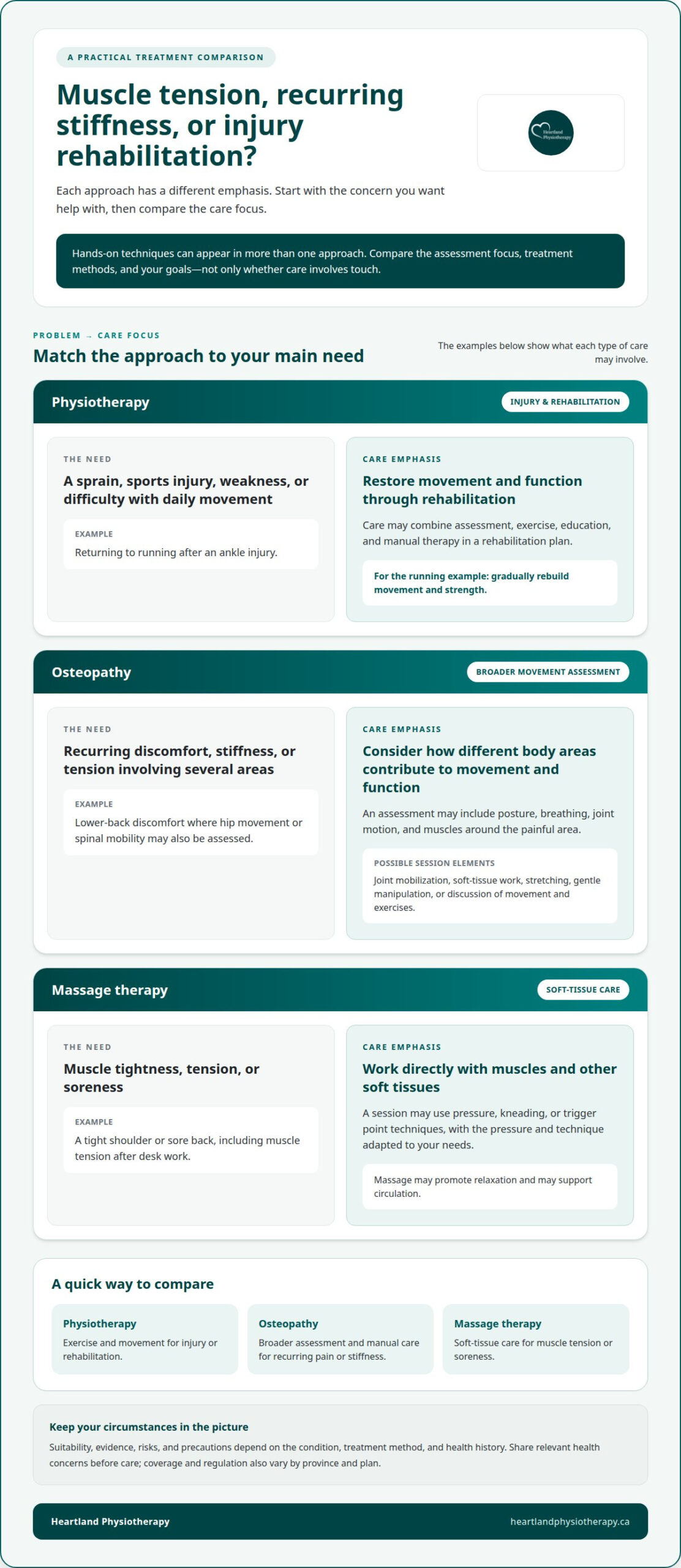
Physiotherapy may suit a sprain, sports injury, weakness, or difficulty with daily movement. Care can combine assessment, exercise, education, and manual therapy in a rehabilitation plan. For example, returning to running after an ankle injury may involve gradually rebuilding movement and strength, an approach often embraced by specialized recovery and performance centres like My Health 360.
Osteopathy for Recurring Pain and Tension
Osteopathy may suit recurring discomfort, stiffness, or tension involving several body areas. Joint mobilization and soft-tissue work can address movement restrictions beyond the painful spot. Massage therapy may be a fit when your main goal is easing muscle tightness or soreness. In the osteopathy vs massage vs physiotherapy comparison, your priorities matter as much as the treatment label.
Conditions Treated and Supporting Evidence
These therapies may address musculoskeletal pain, tension, and movement concerns, but their approaches differ. Suitability and evidence depend on the condition and treatment method. Possible risks and precautions also depend on your health history and the techniques used, so share relevant health concerns before care. Provincial health coverage and extended health benefits vary by province and plan, and regulation differs across provinces and professions. Choose between osteopathy vs massage vs physiotherapy based on your symptoms, goals, and rehabilitation needs.
| Option | May suit | Typical focus |
|---|---|---|
| Physiotherapy | Injury or rehabilitation | Exercise and movement |
| Osteopathy | Recurring pain or stiffness | Broader assessment and manual care |
| Massage therapy | Muscle tension or soreness | Soft tissue and relaxation |
Choose based on your symptoms, activity goals, and whether you need rehabilitation, a broader assessment, or soft-tissue care.
Osteopathy vs Massage: What’s the Difference?
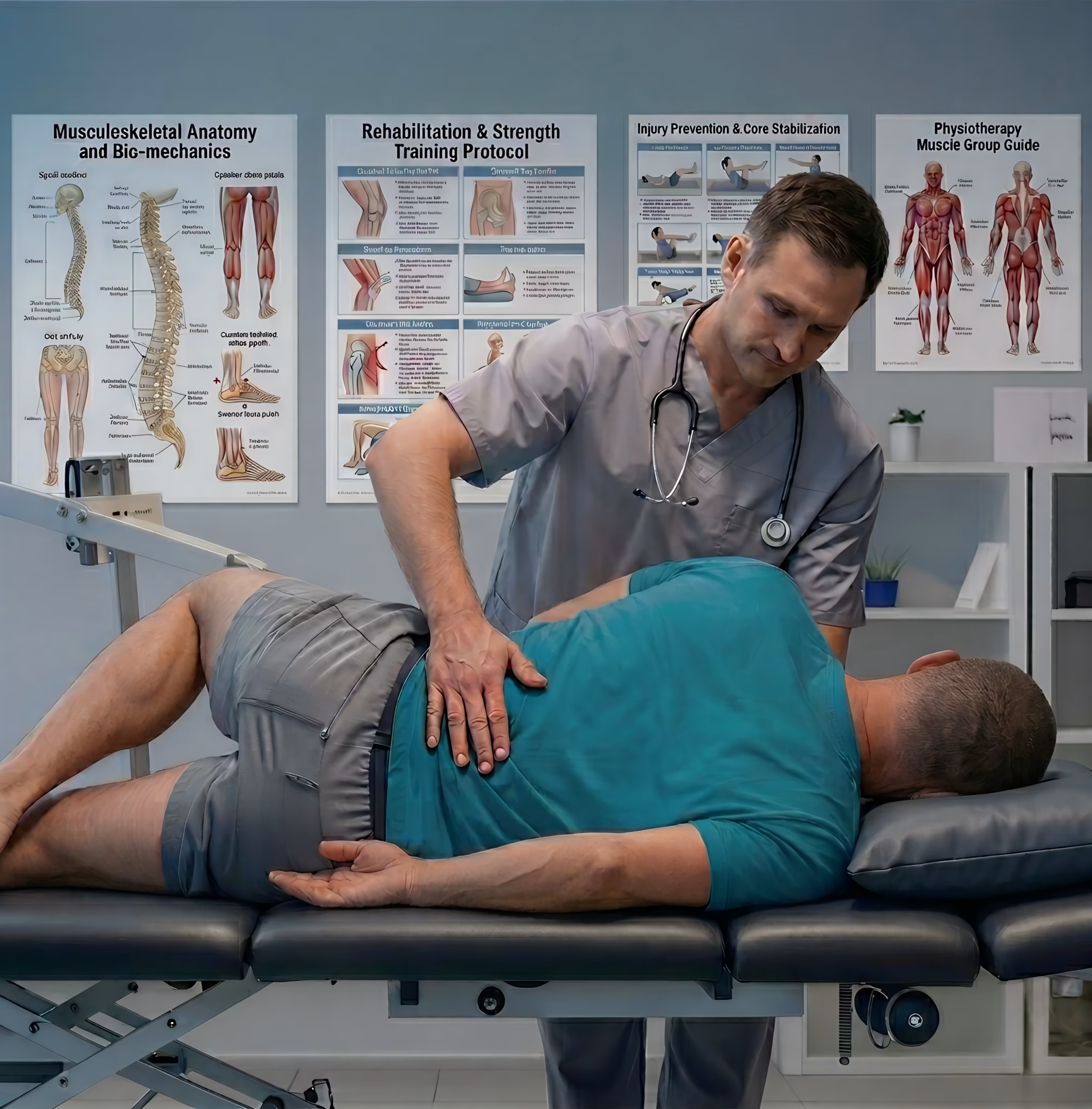
Osteopathy combines hands-on assessment with manual techniques intended to support movement. A practitioner may assess joint motion, muscle balance, and connective tissue, then use joint mobilization, stretching, or gentle manipulation. For neck stiffness, the assessment may include shoulder movement and nearby soft tissues, not just the sore area. This broader assessment is one distinction in the osteopathy vs massage vs physiotherapy comparison, alongside treatment methods and your goals.
Massage therapy focuses more directly on muscles and other soft tissues. A session may use pressure, kneading, or trigger point techniques for a tight shoulder or sore back, with pressure and technique adapted to your needs. Massage may promote relaxation and may support circulation, while osteopathy may combine soft-tissue work with joint techniques after assessing related movement.
Both approaches use skilled touch, but their emphasis differs. If desk work leaves your muscles tense, massage may suit your goal of easing tightness. Recurring stiffness involving several joints may call for a broader osteopathic assessment. Physiotherapy may be relevant when your priority is rehabilitation or improving movement for a specific activity. Compare these differences when choosing osteopathy vs massage vs physiotherapy, along with your symptoms, comfort, and desired outcome.
Both treatments may support mobility: hands-on techniques and manipulation in osteopathy and massage therapy may help support soft-tissue and joint mobility. Osteopathic techniques may include hands-on therapy, joint mobilization, and soft tissue work. Osteopaths may use manual techniques to assess and address symptoms, focusing on overall body function and considering factors that may contribute to discomfort or pain. Manual osteopaths may also use soft-tissue and visceral manipulation, as well as exercise prescription.
Massage therapy works on muscles and soft tissues to help ease tension and may support circulation. Registered massage therapists apply pressure to muscles, fascia, and other soft tissues, selecting techniques to suit the client’s needs. The choice may depend on whether the priority is overall body function or targeted soft-tissue care.
Osteopathy’s whole-body approach
Osteopathy considers how different body areas contribute to movement and function. An assessment can include posture, breathing, joint motion, and the muscles around a painful area. For example, with lower-back discomfort, an osteopathic practitioner may assess hip movement and spinal mobility, rather than focusing only on the sore spot. This whole-body perspective helps identify restrictions that could influence everyday activities, such as bending or walking.
Manual osteopathy uses hands-on techniques selected according to assessment findings. A session may include gentle joint mobilization, soft-tissue work, stretching, or subtle manipulation. The practitioner may also discuss movement or exercises to support function between appointments. These steps differ from care focused only on relaxation or one muscle group. Technique and pressure are adapted to the area treated and your comfort.
Consider recurring neck tension: a practitioner may assess shoulder movement, posture, and nearby muscles before choosing manual therapy. The aim is to address related movement restrictions, not just provide short-term relief at the point of discomfort. Osteopathy’s whole-body approach may suit symptoms that involve several areas or return during routine tasks. Goals may include easier movement and improved function, while relaxation can accompany hands-on care. The assessment helps guide techniques suited to your symptoms and priorities.
Heartland Physiotherapy: Massage Therapy
Heartland Physiotherapy offers Massage Therapy, Physiotherapy Treatment, Osteopathy Treatment, and Chiropractic Care. For people in Meadowvale and across Mississauga, Massage Therapy may suit muscle tension or soreness, while Physiotherapy Treatment may better match a goal of returning to everyday activities after an injury. Osteopathy Treatment may suit recurring discomfort involving several areas.
Each service takes a different approach, so start with what is limiting you. Massage Therapy focuses on hands-on care for soft-tissue concerns. Physiotherapy Treatment can support rehabilitation goals, such as regaining confidence with walking or reaching after an injury. Osteopathy Treatment considers how different areas move together, and Chiropractic Care is another option for musculoskeletal concerns. An assessment helps match your priorities with an appropriate approach.
Before an appointment, consider which activities are difficult and what you hope to improve. You might describe discomfort when carrying groceries, stiffness after sitting, or difficulty returning to a recreational activity. Sharing relevant health history and changes in your symptoms helps inform care. The approach can then be shaped around your concern and functional goals, rather than chosen by service name alone.
To discuss your options, contact Heartland Physiotherapy by phone.
Frequently Asked Questions
So Which One Should You Choose?
Choose according to the change you want in daily life. If shoulder tightness is your main concern, massage may be a suitable starting point. If a knee injury limits walking or sport, physiotherapy can focus on rebuilding movement and capacity. For recurring discomfort involving several areas, osteopathy offers a broader assessment. Your symptoms and goals guide the choice.
Is one profession better for back pain?
No single approach is automatically best for every type of back pain. If discomfort makes lifting, walking, or returning to sport difficult, physiotherapy can focus on those activities. If muscle tightness is your main concern, massage may address it directly. For recurring symptoms alongside stiffness elsewhere, osteopathy may consider how other areas move and contribute.
What Is Massage Therapy?
Massage therapy is hands-on care that uses pressure and other techniques on muscles and soft tissues. A session may focus on a specific area, such as tight shoulders after prolonged desk work, or address general muscle soreness after exercise. The practitioner can adapt the technique and pressure to your comfort and the area being treated.
What is Physiotherapy?
Physiotherapy focuses on improving movement and physical function. A physiotherapist may assess how an injury affects tasks such as climbing stairs, reaching overhead, or walking. Treatment can connect those difficulties with practical rehabilitation goals, using exercise, education, and hands-on methods as appropriate. Leading rehabilitation centres, such as Re-Activ Lugano, often incorporate advanced physiotherapy techniques to optimize functional recovery. This approach may help when returning to a meaningful activity matters most.
Which Treatment Is Right for You?
Start by naming the activity or symptom you want help with, such as sleeping comfortably, walking farther, or returning to a sport. Then consider whether your priority is muscle comfort, recurring stiffness, or rebuilding movement after an injury. If you have more than one concern, a practitioner can discuss how different approaches may fit into a coordinated plan.