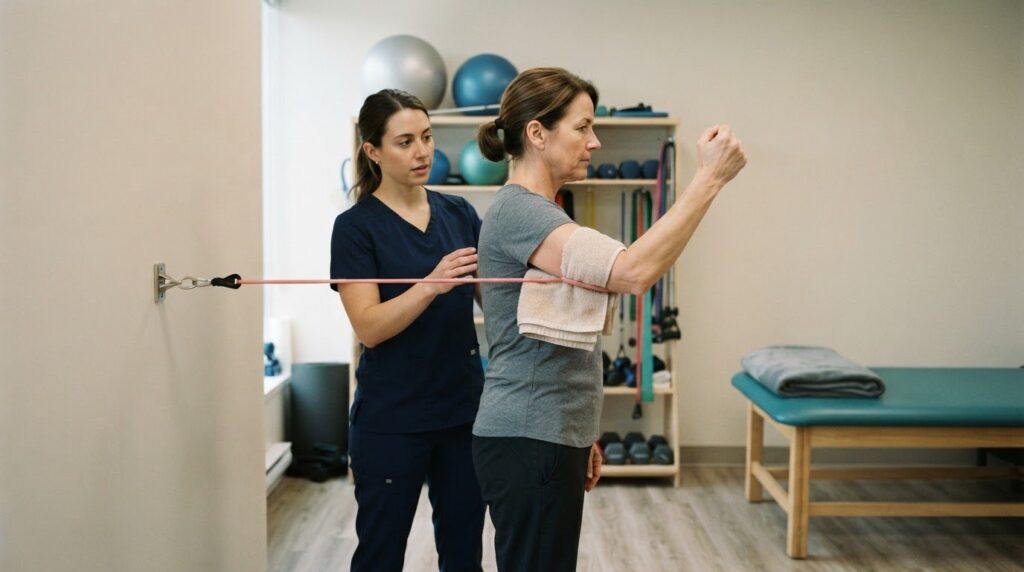
Surgery isn’t the only option for a rotator cuff injury. Some tears improve with non-surgical care, while surgery may be considered based on the tear, symptoms, strength, daily function and personal goals. For rotator cuff surgery rehab in Meadowvale, recovery depends on the procedure, the surgeon’s instructions and how the shoulder heals.
It’s understandable to want clear answers when shoulder pain affects sleep, work or everyday movement. This guide explains when an injury may improve without surgery, what a shoulder assessment can involve and how rehabilitation supports recovery after an operation. It also explains why progress is gradual, with mobility and strength developed in stages rather than rushed.
Key Takeaways
- A rotator cuff injury doesn’t always require surgery; symptoms, strength, function and goals all help shape treatment decisions.
- A shoulder assessment considers movement, strength and injury history because pain alone can’t confirm a tear.
- Rehabilitation progresses in stages, guided by the surgery performed, healing and the surgeon’s instructions.
- Learn which changes during recovery call for medical attention and how physiotherapy can support a gradual return to activity.
Rotator Cuff Injuries and Surgery: Causes and Symptoms
The rotator cuff is made up of four muscles and tendons that help stabilize the shoulder and guide arm movement. An injury can involve a partial tear, affecting part of a tendon, or a full-thickness tear that extends through it.
Symptoms may start after a fall or lifting injury, or develop gradually with repeated overhead activity and tendon irritation. You may notice shoulder pain, weakness, reduced range of motion, or clicking and popping. Pain can be especially noticeable at night or when raising your arm through an uncomfortable arc.
An imaging result alone doesn’t show how much pain or limitation a person experiences. Strength, daily function, activity demands and goals matter too. Surgery may be discussed when shoulder problems persist and the tear and its effects warrant repair, but it isn’t automatic for every tear. The decision depends on the injury and its impact on daily life, with rehabilitation supporting recovery after an operation.
When to Seek an Assessment After Rotator Cuff Surgery
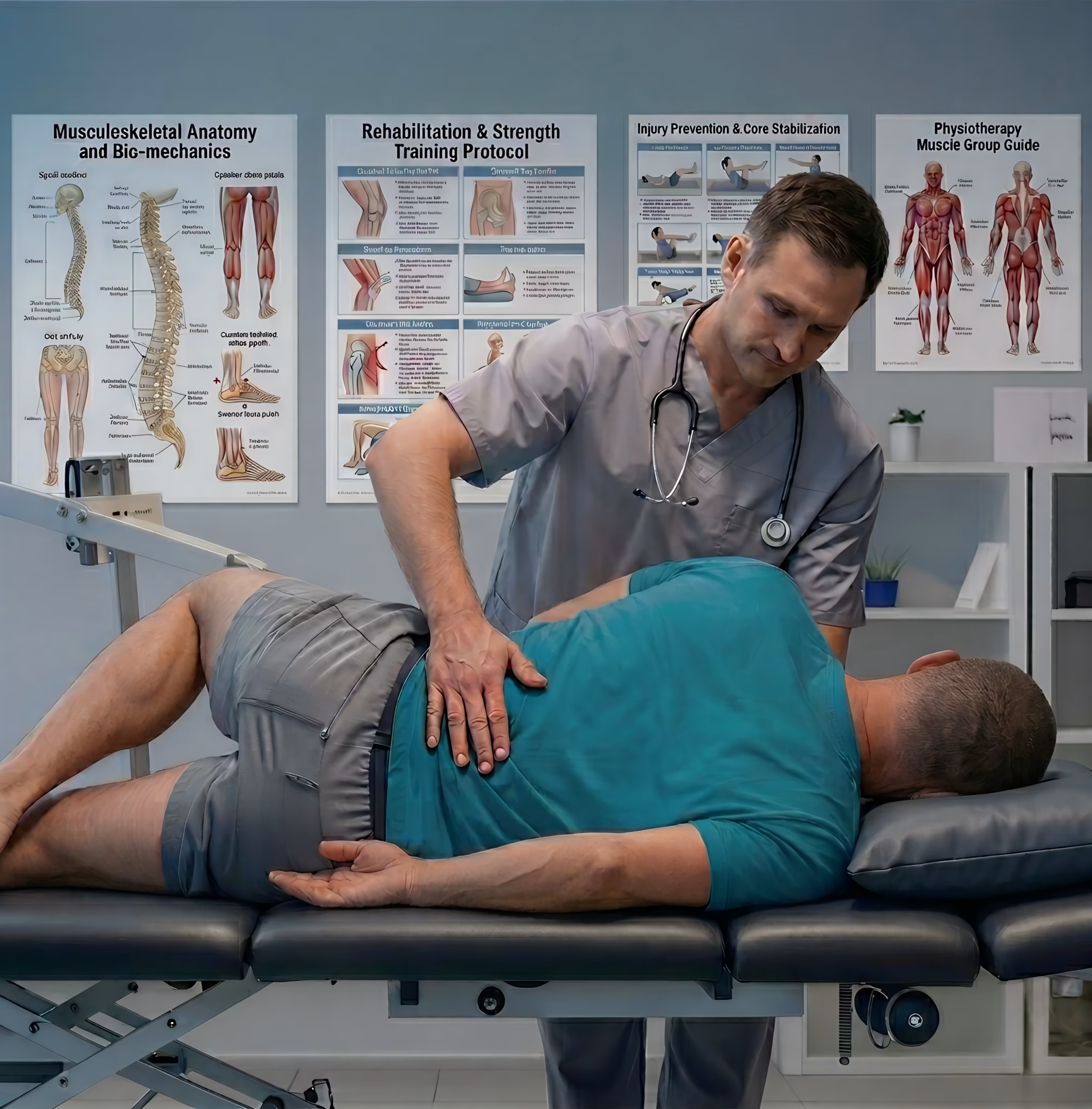
After rotator cuff surgery, rehabilitation should follow the surgeon’s instructions and the procedure performed. An assessment reviews your injury history and post-operative protocol, then checks shoulder movement, strength and daily function. For example, reaching overhead may be harder than bringing a cup to the table.
Physiotherapy frequency depends on the healing stage, the protocol and your response to treatment. The schedule may change as movement and strength improve.
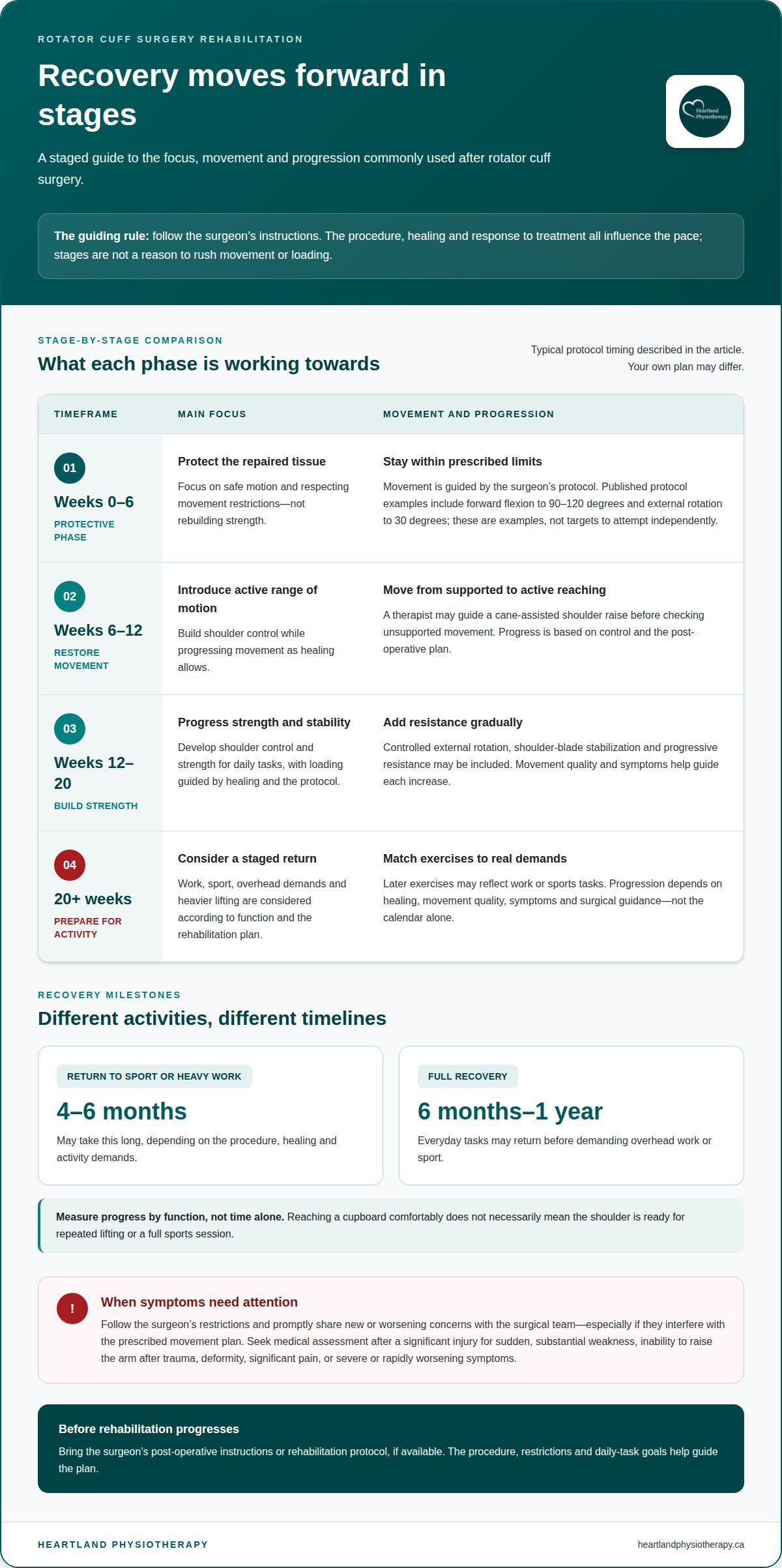
Typical protocols introduce active range of motion during weeks 6-12, followed by progressive strengthening during weeks 12-20. These stages help rebuild shoulder control while respecting healing.
An assessment tracks whether aching, restricted movement or weakness affects progression. Strengthening and stabilization work advances as control improves; return to activity is considered from 20 weeks onward, based on function and the rehabilitation plan.
Bring the surgeon’s post-operative instructions, if available. Information about the procedure, movement restrictions and daily task goals helps guide treatment progression.
Rehabilitation After Rotator Cuff Surgery
Rehabilitation follows the surgeon’s protocol because repaired tissue needs protection before loading. During weeks 0-6, the protective phase focuses on safe motion and respecting restrictions, not rebuilding strength. The operation and symptoms shape the pace.
From weeks 6-12, rehabilitation typically introduces active range of motion. Physiotherapy may guide progression from supported movement toward using shoulder muscles without assistance, as control allows. The goal is useful function, such as reaching chest-height shelves before repeated overhead lifting.
Progressive strengthening begins during weeks 12-20, building shoulder stability and strength for daily tasks. Later work prepares for sports, overhead demands or heavier lifting. Return to activity is placed at 20+ weeks in a staged protocol; timing follows healing and surgical guidance. An assessment checks movement quality and symptoms before progression; increasing load too quickly can disrupt recovery.
Bring the surgeon’s rehabilitation protocol or post-operative instructions to physiotherapy, if available. Rotator cuff tear recovery time varies depending on the treatment approach, tear severity and adherence to the rehabilitation program.
Exercises at Each Stage of Rotator Cuff Rehabilitation
Exercise choice depends on the repair and the surgeon’s restrictions, so a standard list won’t suit every shoulder. During the protective phase, movement stays within the prescribed limits. OV Surgical describes examples that include forward flexion to 90-120 degrees and external rotation to 30 degrees during weeks 0-6. These are protocol examples, not targets to attempt independently.
During weeks 6-12, active-assisted movement may progress toward active reaching. A therapist might use a cane-assisted shoulder raise before assessing unsupported movement. As healing permits, strengthening can include controlled external rotation or shoulder-blade stabilization. The goal is steady control, not lifting heavier loads quickly.
From weeks 12-20, progressive resistance may prepare the shoulder for tasks such as carrying groceries or reaching overhead. Later exercises can reflect work or sports demands. The therapist adjusts range, resistance and task complexity according to surgical instructions, movement quality and symptoms, advancing activity as function improves.
Recovery Expectations and When to Seek Medical Attention
Recovery after rotator cuff repair takes time. Tear severity, the procedure, activity demands and the shoulder’s response all influence progress. Return to sport or heavy work may take 4-6 months, while full recovery can take six months to a year. These are different milestones: everyday tasks may return before demanding overhead work or sport.
Progress is measured by function, not the calendar alone. Reaching a cupboard comfortably, for example, doesn’t necessarily mean your shoulder is ready for repeated lifting or a full sports session. Follow the surgeon’s restrictions and report symptoms that worsen or disrupt rehabilitation.
Seek medical assessment after a significant injury if you have sudden, substantial weakness, cannot raise your arm following trauma, notice a deformity, have significant pain, or experience severe or rapidly worsening symptoms. After surgery, promptly share new or worsening concerns with the surgical team, especially if they interfere with the prescribed movement plan. An assessment can help clarify whether the rehabilitation plan needs adjustment.
How Heartland Physiotherapy Can Help
For rotator cuff surgery rehab in Meadowvale, Heartland Physiotherapy provides Physiotherapy Treatment guided by your surgeon’s instructions and your shoulder function.
An assessment reviews your procedure, restrictions, movement, strength, symptoms and practical goals, such as dressing independently or reaching a work surface. This helps tailor rotator cuff surgery rehabilitation in Meadowvale to the tasks you want to resume, from work routines to recreational activity.
Treatment may progress from protected mobility to shoulder control and strengthening as healing allows. Your therapist can adjust the plan as your pain, movement quality and daily tasks change.
Bringing your post-operative protocol helps align rehabilitation with the surgeon’s instructions. If you’re recovering from surgery or unsure how to resume activity, an assessment can help clarify a suitable next step.
Contact Heartland Physiotherapy to discuss your rehabilitation needs.
Frequently Asked Questions
What are the stages of rehabilitation after rotator cuff surgery?
Rehabilitation commonly moves from protection to restored movement, strengthening and activity-specific preparation. A typical outline places protection in weeks 0-6, active movement in weeks 6-12, and progressive strengthening in weeks 12-20, followed by return to activity from 20 weeks onward. For example, a work plan may build toward repeated reaching only as shoulder control and healing allow.
How long does recovery take after rotator cuff repair?
Recovery may take six months to a year, depending on the tear, procedure, healing response and activity demands. Return to sport or heavy work may take 4-6 months, but that milestone doesn’t mean every shoulder is ready for unrestricted activity. A person whose job involves overhead lifting may need different functional preparation than someone returning to lighter daily tasks.
When can you stop wearing a sling after rotator cuff surgery?
There isn’t one sling-discontinuation date that applies to every repair. The surgeon’s instructions and the procedure determine how long the shoulder needs protection. Follow the prescribed sling schedule, including guidance for sleep and personal care, and don’t stop using it just because the shoulder feels more comfortable. The surgical team can clarify when and how to reduce sling use.
Which Meadowvale physiotherapy clinics offer post-operative rotator cuff rehabilitation?
Heartland Physiotherapy in Meadowvale provides Physiotherapy Treatment for post-operative rehabilitation. Care can address shoulder movement, strength and everyday function while following the surgeon’s protocol. For rotator cuff surgery rehabilitation in Meadowvale, the clinic offers local support with goals such as getting dressed, returning to desk work or preparing for recreational activity.
What activities and movements should be avoided after rotator cuff surgery?
Avoid movements that conflict with the surgeon’s restrictions, especially lifting, pushing, pulling or reaching overhead before you’re cleared to do so. The affected arm may have specific limits on its range of motion and effort. For example, carrying a heavy grocery bag can place unexpected load on the repair. Follow the written protocol and have new activity demands assessed before resuming them.