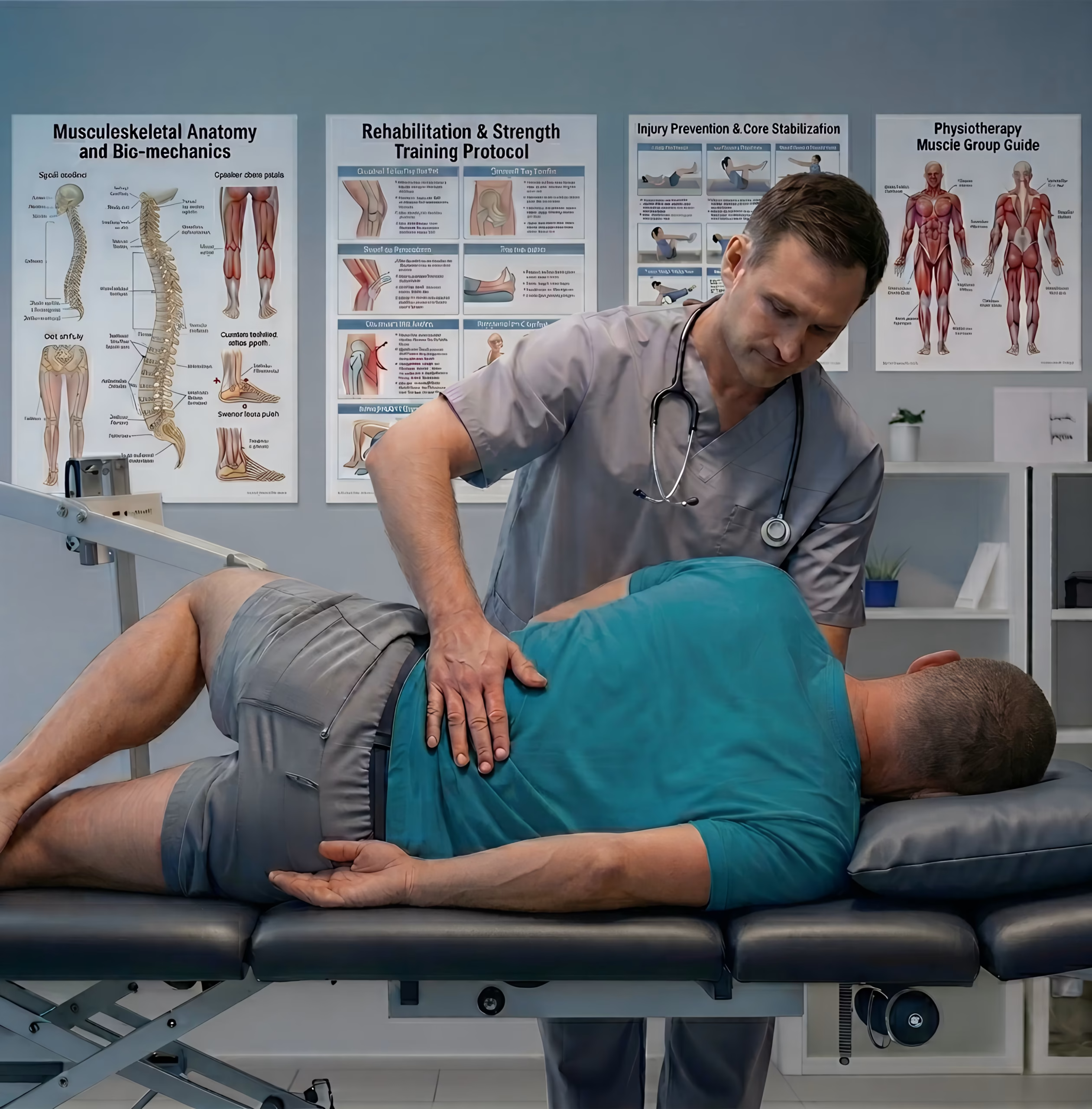


Pain in one area doesn’t always begin there. When a muscle is strained or not moving well, nearby muscles may take on extra work, creating compensatory patterns that affect movement and recovery. Our therapists may treat muscles one by one, considering how each area contributes to the pattern.
It makes sense to want care that looks beyond the sore spot. You’ll learn how our therapists assess these connected patterns and treat muscles one by one with techniques suited to the areas involved. The article explains how targeted muscle therapy may address tension and movement restrictions, support recovery, and combine hands-on care with movement work. This approach starts by considering what may contribute to your symptoms, rather than applying the same treatment everywhere.
Key Takeaways
- Notice how a sore area may be affected by nearby muscles compensating for restricted movement.
- Learn how hands-on techniques can target specific tension and soft-tissue restrictions.
- Understand how physiotherapy, massage therapy, osteopathy and chiropractic care may approach muscle concerns.
- See how an assessment can guide treatment choices based on your symptoms, movement and recovery needs.
Muscle therapy and recovery
Muscle-by-muscle care considers how specific tissues affect movement and recovery. Our therapist treats muscle by muscle, assessing tension, mobility and circulation across the areas involved. This can help connect a sore spot with movement changes elsewhere.
Conditions treated with muscle-by-muscle therapy
This approach focuses on muscle tension and movement restrictions that contribute to discomfort. It may be used for muscle strains, tendonitis, back pain, frozen shoulders and knee injuries. For example, if shoulder movement feels restricted, a therapist can assess surrounding muscles as well as the painful area. Our therapist treats muscle by muscle to help identify which tissues and movements may be affecting everyday activities.
Treatment sessions and duration
There is no single session count or appointment length for every concern. The schedule depends on factors such as the area involved, symptom duration, movement limits and how your body responds. A recent muscle strain may call for a different plan than persistent back pain with restricted mobility. As recovery progresses, our therapist treats muscle by muscle and reassesses movement to adjust the focus, rather than following a fixed sequence for everyone.
Canadian insurance coverage depends on your plan, the eligible service and practitioner requirements. Review your benefits for covered services and reimbursement requirements before planning care.
Pressure on a muscle can feel uncomfortable. Tell the therapist if it feels sharp or goes beyond your comfort level, so the technique or pressure can be adjusted.
In Meadowvale, consider the practitioner’s role and the type of care suited to your concern, such as physiotherapy, massage therapy or osteopathy. Look for a clear explanation of the assessment and how treatment relates to your movement goals.
Muscle therapy techniques
Targeted techniques focus on specific tissues to address tension and support movement. The choice depends on the restriction and the function it affects.
Therapists who use muscle-by-muscle treatment
Physiotherapists and massage therapists may use focused techniques to address particular muscles and soft-tissue restrictions. Physiotherapy can combine hands-on treatment with exercises, while massage therapy uses movement and pressure on soft tissues. Remedial massage therapists may also use passive stretching or trigger point work. Knowing these approaches helps you understand why treatment can vary with your movement goals and symptoms.
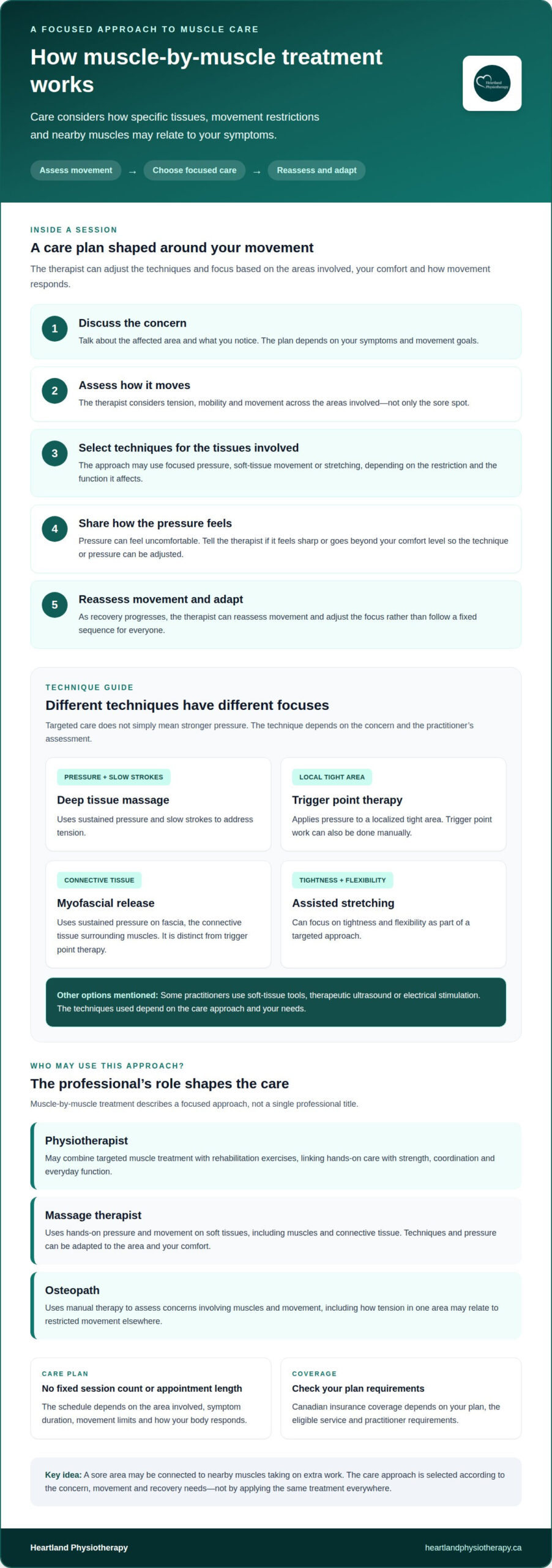
For example, deep tissue massage uses sustained pressure and slow strokes to address tension. Trigger point therapy applies pressure to a localized tight area, while myofascial release uses sustained pressure on connective tissue. Assisted stretching can also focus on tightness and flexibility. Each technique has a different purpose, so targeted care does not simply mean stronger pressure.
What happens during a session
A session typically begins with a discussion of the affected area and an assessment of how it moves. The therapist selects techniques for the tissues involved, then may use focused pressure, soft-tissue movement or stretching. You can describe how the pressure feels during treatment, allowing the therapist to adjust the approach and reassess movement in relation to your goals.
Compared with a general massage, muscle-by-muscle treatment focuses on particular areas related to your movement concern. Physiotherapy may also include exercises, so it can involve more than hands-on care.
If movement restrictions are affecting daily activities, a physiotherapy assessment can help identify suitable treatment options.
Some practitioners use tools for soft-tissue work, therapeutic ultrasound or electrical stimulation. Trigger point work can also be done manually. The techniques used depend on the care approach and your needs.
Which types of therapists use muscle-by-muscle treatment?
Muscle-by-muscle treatment describes a focused approach, not a single professional title. Different practitioners may assess specific muscles and choose hands-on care or movement work according to the concern.
Physiotherapists may combine targeted muscle treatment with rehabilitation exercises. For example, if a muscle strain changes how someone climbs stairs, they can address the affected tissues and work on the movement pattern. This can connect hands-on care with strength, coordination and everyday function.
Osteopaths use manual therapy to assess concerns involving muscles and movement. An appointment may consider how tension in one area relates to restricted movement elsewhere. This broader view can help explain why care may address more than the area where symptoms are most noticeable.
The right approach depends on your concern and goals. Someone recovering from an injury may benefit from movement-focused rehabilitation, while someone seeking hands-on care for muscle tension may consider massage therapy. An assessment helps connect symptoms and movement goals with a suitable treatment approach.
In Meadowvale, choose care based on the concern you want addressed and the type of treatment involved. If pain or restricted movement is affecting daily activities, book an assessment to discuss an appropriate approach.
Myotherapy is another approach sometimes considered for postural concerns, persistent pain or athletic performance goals. Its suitability depends on the concern and the practitioner’s assessment.
Myofascial release is a hands-on technique that applies pressure and stretching to the fascia, the connective tissue surrounding muscles. It is distinct from trigger point therapy, which focuses on sensitive areas within muscles. The suitability of either approach depends on the concern and the practitioner’s assessment.
Heartland Physiotherapy
Heartland Physiotherapy in Meadowvale, Mississauga, can help you explore muscle pain, tension or restricted movement and understand which care options may suit your needs. An assessment considers your symptoms and their effect on everyday activities. Depending on your concerns and goals, care options include physiotherapy, massage therapy, osteopathy and chiropractic care.
If muscle discomfort is affecting your routine or recovery, contact Heartland Physiotherapy in Meadowvale, Mississauga, to discuss your concerns and arrange an appointment.
Choose a next step that fits your movement goals
Start the conversation with one practical goal: a movement you want to manage more comfortably, whether that involves navigating everyday routines or preparing for an active trip such as a wildlife tour with Ripple Safaris. Describe what feels difficult, when you notice it and how it affects your day. This context helps your therapist focus the assessment on what matters to you, rather than addressing tension without considering its impact.
Understanding how our therapist considers individual muscles in relation to your movement can help you explain what you hope to regain. If discomfort or restricted mobility is making daily activities harder, discuss your concerns and possible care options with Heartland Physiotherapy. Start with the movement you want help with.
Contact Heartland Physiotherapy to talk about your concerns. A clearer understanding of your needs can help you move forward with confidence.
Frequently Asked Questions
What does muscle-by-muscle therapy mean?
Muscle-by-muscle therapy focuses on particular muscles rather than treating every area alike. A therapist may assess whether tightness in one part of the body affects a task such as reaching overhead or turning your head. This focused approach connects treatment with a movement you want to manage more comfortably.
What techniques are used to treat muscles individually?
Techniques may include passive stretching, myofascial cupping, or instrument-assisted soft-tissue mobilization. A therapist selects an approach based on the area being treated and the movement concern. For example, a tight muscle may be addressed with stretching, while a localized tender point may receive focused manual pressure. The treatment focus can change as movement is reassessed.
What are the risks or side effects of treating individual muscles?
Pressure on a muscle can feel uncomfortable. Tell the therapist if it feels sharp or goes beyond your comfort level so they can adjust the technique or pressure.
How can I find a qualified muscle therapist near me in Canada?
In Meadowvale, choose a practitioner whose role and type of care suit your concern, such as physiotherapy, massage therapy or osteopathy. Look for a clear explanation of the assessment and how treatment relates to your movement goals.