



Massage is not defined by pressure alone. If you’re comparing how our massage therapy differs from other massage therapy services, the meaningful differences often come down to the purpose of the session, how time is used, and whether the treatment fits your broader needs. A relaxing full-body massage and focused care for muscle tension can feel quite different, even when both use hands-on techniques. It’s reasonable to want a session that feels comfortable and has a clear purpose.
A thoughtful massage therapy appointment starts with your goals and relevant health information, then shapes the session and techniques around your needs. This article explains how those choices can make our massage therapy different from other massage therapy options, and how massage may complement physiotherapy or chiropractic care. You’ll get a clearer sense of what to expect, how care can be coordinated, and what to consider when deciding whether massage suits you.
Key Takeaways
- Choose appointment time based on whether your priority is one focused area or a broader treatment plan.
- Sharing your goals and relevant health information helps shape a session around your needs.
- Different massage techniques can address different concerns, so the approach matters as much as pressure.
- Massage may complement physiotherapy or chiropractic care, with each approach contributing a different focus.
Appointment length and treatment planning
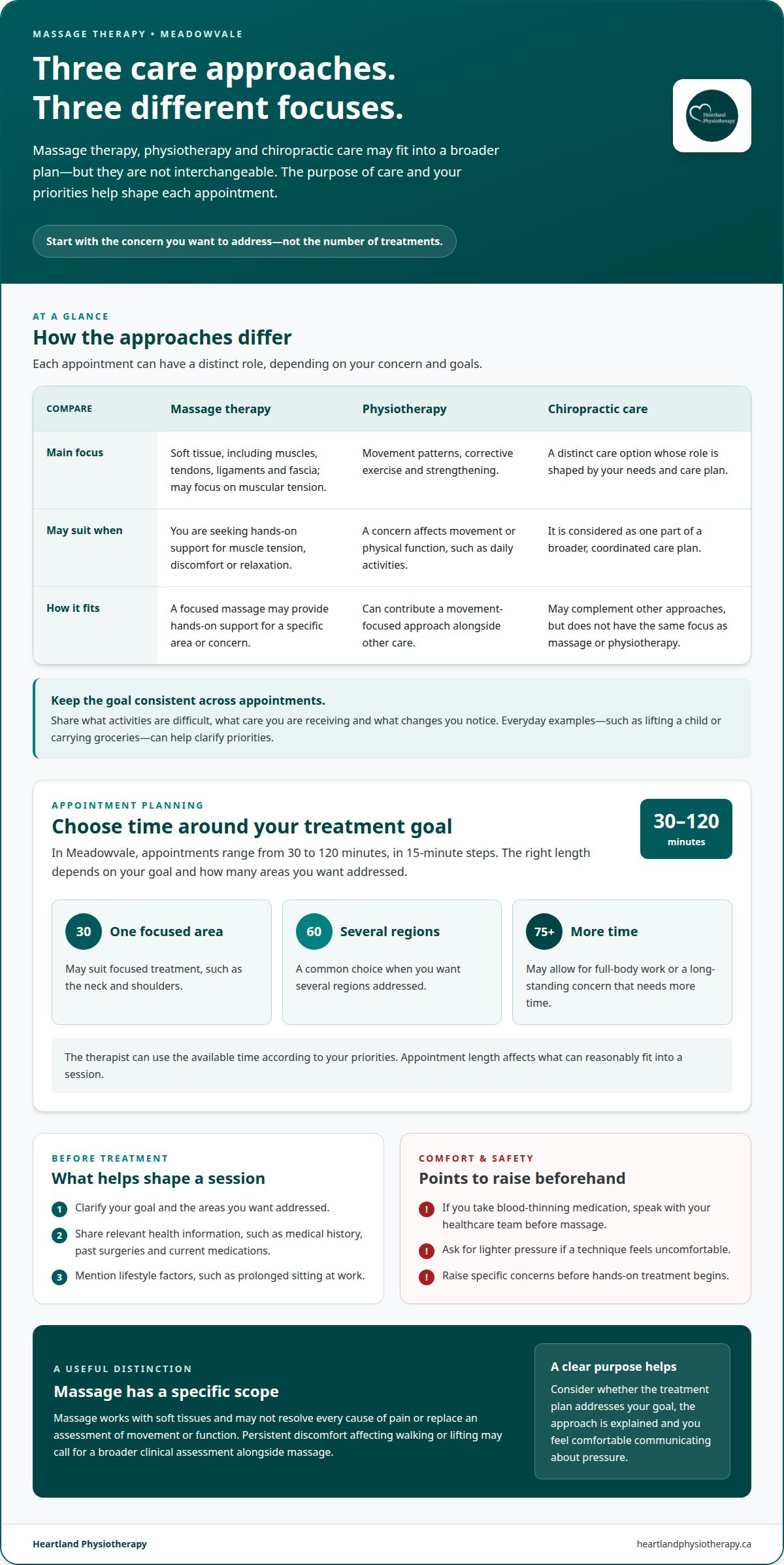
In Meadowvale, appointments range from 30 to 120 minutes, in 15-minute steps. The right length depends on your treatment goal and how many areas you want addressed.
Treatment goals and focus
Massage therapy is hands-on care for soft tissues, including muscles, tendons, ligaments, and fascia. A wellness massage may focus on relaxation, while therapeutic massage may address a specific concern, such as shoulder tension. Clarifying your goal helps determine which areas receive attention and how the session is used. Focused treatment and a broader massage session serve different priorities.
Individualized treatment plans
Personalized care takes your goals and health information into account before treatment begins. Your therapist may discuss your medical history, past surgeries, current medications, and lifestyle, such as prolonged sitting at work. This information helps shape the session and pressure. If you take blood-thinning medication, speak with your healthcare team before receiving massage.
Appointment length affects what can reasonably fit into a session. For example, 30 minutes may suit one focused area, such as the neck and shoulders. A session of 75 minutes or longer can allow time for full-body work or a long-standing concern. The therapist can use the available time according to your priorities.
Client ratings reflect individual experiences, but they don’t establish a fair ranking against other providers. A meaningful comparison requires comparable review information and criteria. Instead of relying on ratings alone, consider whether the treatment plan addresses your goal, the therapist explains the approach, and you feel comfortable communicating about pressure.
Safety screening starts with discussing health conditions, medications, and relevant history before hands-on treatment. You can ask for lighter pressure if a technique feels uncomfortable. Clean linens and properly cleaned contact surfaces are also important in a hygienic massage setting. Raise any specific concern before treatment begins.
Massage has limits: it works with soft tissues, so it may not resolve every cause of pain or replace an assessment of movement or function. For example, persistent discomfort that affects walking or lifting may call for a broader clinical assessment alongside massage.
Before scheduling massage therapy, consider your main goals and be ready to share them, along with relevant health conditions. Medical massage therapy focuses on functional outcomes intended to improve a patient’s condition, using techniques intended to support specific outcomes. Session length can also shape the experience: Thirty minutes may suit one focused area, such as the neck and shoulders. Sixty minutes is a common choice for several regions. Seventy-five minutes or longer may suit full-body work or a long-standing concern that needs more time.
Coordination with physiotherapy and chiropractic care
For people in Meadowvale and across Mississauga, coordinating care means giving each appointment a clear purpose. Massage therapy, physiotherapy, and chiropractic care offer different approaches. Make sure each treatment relates to the concern you want addressed rather than assuming every appointment serves the same role.
Consider someone whose wrist discomfort affects work tasks and recreation. Massage therapy may provide hands-on care, while physiotherapy can focus on movement patterns and strengthening relevant to daily activities. Chiropractic care is another distinct option within a broader plan. The right approach depends on the concern and your goals, not simply on choosing more treatments.
Coordination also depends on the information you share. Explain which activities are difficult, what care you’re receiving, and what changes you notice between appointments. For example, if lifting a child or carrying groceries remains difficult, describe that task. It gives your care team a practical reference for discussing priorities and how different approaches may fit together.
Clear roles help prevent treating the same concern as though each discipline has an identical focus. Physiotherapy emphasizes corrective exercise, strengthening, and movement patterns. Massage therapy focuses on soft tissue and muscular tension. Chiropractic care can be part of a multidisciplinary approach, with its role shaped by your needs and care plan. These approaches may complement one another, but they aren’t interchangeable.
Coordinated care doesn’t mean everyone needs multiple types of treatment. A focused massage appointment may suit someone seeking hands-on support, while a concern affecting physical function may make movement-focused care relevant. Understanding the distinction helps you see what each appointment is intended to contribute. It also gives you a useful way to discuss priorities without expecting one treatment to address every aspect of a problem.
In a multidisciplinary plan, keep the goal consistent across appointments. If your concern or its impact changes, share that update so the treatment focus can be reconsidered. This helps keep massage therapy, physiotherapy, and chiropractic care connected to your priorities rather than becoming separate, unrelated visits.
Heartland Physiotherapy: Massage Therapy
Heartland Physiotherapy offers massage therapy for people in Meadowvale, Mississauga, seeking hands-on support for muscle tension, discomfort, or relaxation. To understand how our massage therapy is different from other massage therapy, start with the purpose of your care and what you want to address.
If a concern affects your movement or daily activities, Physiotherapy Treatment may offer a complementary focus. Osteopathy Treatment is another option for different care needs, with each approach serving a distinct role.
To discuss whether massage therapy suits your needs, contact Heartland Physiotherapy in Meadowvale, Mississauga.
Take the next step toward care that fits
Understanding how our massage therapy is different from other massage therapy options can help you consider what you want from professional care. Before arranging an appointment, think about how your concern affects work, rest, exercise, or other daily activities. Describing that impact gives the conversation a useful starting point.
You don’t need to arrive with a treatment plan already in mind. Share what’s bothering you and what you hope to address, then discuss whether massage therapy is a suitable next step. If your needs call for a broader approach, Heartland Physiotherapy can also discuss other care options with you.
Ready to talk through your next step? Discuss your needs with Heartland Physiotherapy. A clear conversation can help you move forward with greater confidence.
Frequently Asked Questions
How do we personalize massage treatments for each client?
We tailor massage techniques and pressure to your comfort, preferences, and treatment goals. You might prefer a gentler approach for relaxation or focused attention on a tense area. Share what feels comfortable during the session so the therapist can adapt the approach. The aim is care that suits your needs, not a standard routine.
What conditions or goals can our massage therapy help with?
Massage therapy may support goals such as relaxation and easing muscle tension or discomfort. Someone with tight shoulders after desk work, for example, may want focused attention there, while an active person may seek support for post-exercise soreness. Massage can also be part of care for chronic pain or sports-related concerns. Your treatment goal helps determine whether it’s an appropriate option.
How long are sessions and what is included in each appointment?
Appointments range from 30 to 120 minutes, in 15-minute steps. The appointment includes time to clarify your focus, receive hands-on massage, and share feedback about comfort and pressure. A shorter booking can concentrate on a specific concern, while a longer session allows time for a broader treatment focus. Your therapist can help direct the available time toward your priorities.
How do clients rate our massage therapy compared with other providers?
Client ratings reflect individual experiences and don’t establish a fair ranking against other providers. Consider whether the treatment plan addresses your goal, the therapist explains the approach, and you feel comfortable communicating about pressure.